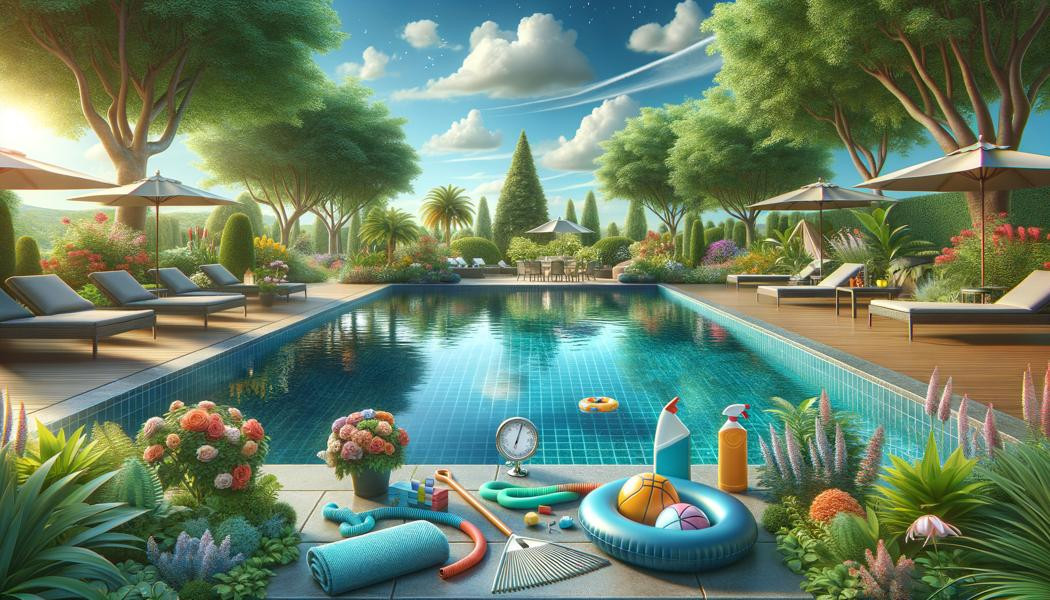
In this article, we will explore the secrets of effective pool maintenance to ensure clear water all year round. Regular pool upkeep is essential for the safety and health of swimmers, as well as for preserving water quality. We will look at why this maintenance is crucial, what elements to monitor, disinfection methods, as well as other practical tips to guarantee that your pool remains a pleasant and safe place.
Need help with your pool maintenance? Quickly find a qualified service provider on Helplease and enjoy a tailor-made service to meet all your needs. Discover professionals near you!Summary
- Why is it essential to maintain your pool regularly?
- What are the main elements to monitor for clear water?
- How to balance the pH of pool water?
- What are the most effective water disinfection methods?
- How often should you clean your pool filter?
- What chemicals are necessary to maintain a pool?
- How to prevent the proliferation of algae in the pool?
- What are the tricks to maintain water temperature?
- What types of seasonal maintenance should be carried out for a pool?
- How to manage debris and leaves in pool water?
- What tools are essential for proper pool maintenance?
- How to detect and resolve common pool water issues?
Why is it essential to maintain your pool regularly?
Regular pool maintenance is an unavoidable task for any owner concerned about the quality of their aquatic space. Neglecting it can lead to issues such as algae proliferation, bacteria growth, and cloudy water, making swimming dangerous. Maintaining good pool hygiene not only protects your investment but also ensures swimmer safety. Preventive care avoids expensive repairs and extends the lifespan of your equipment.
Another important aspect is implementing multiple maintenance techniques, which together guarantee healthy water. For example, regular testing to check the water's chemical balance is crucial. By conducting these checks, you can quickly detect and correct any anomaly before it becomes a major problem. This includes monitoring pH, alkalinity, and water hardness.
Regular cleaning of the pool, which includes brushing the walls and cleaning the filter, is also essential. This guarantees the removal of debris and contaminants that can accumulate. A well-maintained pool is more enjoyable to use and gives a good impression to guests.
Finally, maintaining your pool regularly helps keep the water at a comfortable swimming temperature, optimizing its use throughout the year. In conclusion, rigorous and regular maintenance is key to enjoying your pool optimally, safely, and pleasantly.
Professionals, are you looking for more clients? Register on Helplease today to offer your services and grow your business. Access a large client base in just a few clicks!What are the main elements to monitor for clear water?
To keep your water clear, it is crucial to monitor several key elements. Firstly, the level of chlorine in the water should be checked regularly. Chlorine plays a fundamental role in disinfecting water by eliminating bacteria and microorganisms. Proper balance ensures not only water clarity but also user safety.
Secondly, pH balance. Water should be kept at a pH between 7.2 and 7.6. If the pH is too high, chlorine will lose its effectiveness; conversely, if it's too low, it can irritate swimmers’ skin and eyes. Specific products are available to adjust pH as needed.
It's also important to check water alkalinity, which should be between 80 and 120 ppm (parts per million). This measure stabilizes the pH and protects pool surfaces against oxidation. Another important element to monitor is water hardness. Too low a calcium and magnesium level can damage pool surfaces, while too high can lead to scaling and equipment fouling.
Finally, it is essential to monitor the presence of algae in the water. Algae can develop quickly if imbalances are present. The regular use of clarifiers and algaecides is recommended to prevent their appearance and ensure a pleasant swimming season.
How to balance the pH of pool water?
Balancing the pH is fundamental for maintaining pool water quality. Here are a few steps to do this effectively. The first is to test the pH of the water with a test kit available in specialty stores. If the pH is outside the recommended range, adjustments will be necessary.
To lower the pH, use a suitable product, often based on muriatic acid or aluminum sulfate. It is advisable to dilute the product in a bucket of water before adding it to the pool, thus avoiding any skin or eye irritation.
Conversely, if the pH is too low, products known as “pH plus” should be used. These generally contain sodium bicarbonate. As with lowering products, it's crucial to follow the manufacturer's instructions. In general, adding a small amount, waiting 4 to 6 hours, then checking the pH again can help you avoid major fluctuations.
Once the treatment is done, it is also essential to run the pump for at least 24 hours to ensure good distribution of the product in the water. This will help stabilize the balance and ensure water clarity.
What are the most effective water disinfection methods?
Disinfecting pool water is essential for ensuring a healthy swimming environment. Among the recognized methods, chlorine remains the most popular. Used mainly as granules or tablets, it acts quickly to kill germs and bacteria.
An alternative to chlorine is the use of ozone. This method is not only effective at destroying contaminants, but it also leaves no chemical odor in the water. Ozone is a powerful oxidizer that breaks down organic material present in the pool.
Next, treatment with UV (ultraviolet) is a non-chemical disinfection method. This system uses UV light to sterilize the water, thus reducing the need for chlorine. It is particularly effective at destroying viruses and bacteria.
Finally, treatment systems based on copper and silver, known for their antimicrobial properties, are also being developed. These methods offer an alternative for those seeking to reduce the use of chemicals while maintaining water quality.
How often should you clean your pool filter?
The cleaning frequency for your filter mainly depends on several factors such as pool usage, geographic location, and the type of filter installed. However, it is generally recommended to clean the filter every month, or more often if you notice a drop in pressure or cloudy water.
After heavy rains or large pool activities, it's best to check the filter's condition and clean it, as these situations can bring in large amounts of dirt and debris.
For cartridge filters, a quick rinse with fresh water is usually sufficient. For sand filters, backwashing is required. This mechanically removes the accumulated impurities.
Finally, note that diatomaceous earth filters should be cleaned every 3 to 4 months. By following these cleaning recommendations, you ensure effective filtration and optimal maintenance of your pool water clarity.
What chemicals are necessary to maintain a pool?
For quality maintenance, several chemicals are required to manage your pool. First, chlorine is a must-have. It is crucial for disinfection and maintaining water hygiene. Chlorine tablets or granules allow for proper dosing according to your pool's needs.
Additionally, pH plus and pH minus, mentioned above, allow you to adjust the water’s pH balance to optimize chlorine efficiency. Other products include algaecides to prevent algae growth and flocculants that help cluster particles for easier cleaning.
Furthermore, there are chlorine stabilizers that protect it from UV rays, thus optimizing its effectiveness. These are especially recommended in sunny climates.
Finally, before winter, a shock treatment is recommended to purify the water and prepare it for winterizing. Overall, proper use and correct dosing of these chemicals will ensure clean and clear water throughout the year.
How to prevent the proliferation of algae in the pool?
Preventing algae growth in your pool is essential for keeping the water clear and clean. The first step is to ensure adequate chemical balance. Regular disinfection with chlorine, coupled with frequent pH testing, is crucial.
Moreover, using algaecides as a precaution can be effective. These products help prevent algae growth, especially during hot periods. Application should follow the instructions and be done as a preventive measure, particularly during seasonal changes.
At the same time, water circulation must be optimal. Ensuring that the filtration system works effectively guarantees that water does not stagnate, thereby reducing the risk of algae proliferation.
Finally, regular cleaning of the pool, including the walls and floor and removal of floating debris, will limit surfaces where algae can grow. By following these recommendations, you will foster an environment suitable for a pleasant, worry-free swim.
What are the tricks to maintain water temperature?
Maintaining an ideal water temperature for your pool is crucial for optimal comfort. One of the most effective tricks is to use a pool cover. During downtime, the cover retains heat at night and reduces water evaporation during the day.
Furthermore, installing solar panels can be an ecological and economical solution to heat your pool water. These devices can easily help raise water temperature, especially in sunny regions.
In addition, using dedicated pool heaters can help you quickly reach the desired temperature. These devices are particularly recommended in cooler climates.
Finally, it's also advisable to check and insulate the pipes and heating systems to ensure good energy efficiency. With these various methods, you can guarantee a pleasant temperature to enjoy your pool all year round.
What types of seasonal maintenance should be carried out for a pool?
Seasonal pool maintenance is essential to prepare for opening and closing your pool. Before summer, a thorough cleaning is recommended, brushing the walls and vacuuming the floor to remove dirt accumulated over the winter.
Also, at opening, a shock treatment with a disinfectant should be applied to restore water quality. pH and chlorine levels should be tested and adjusted accordingly.
As winter approaches, you need to winterize the pool. This process involves cleaning the walls and filters, and adding a winterizing product to prevent damage from low temperatures. Furthermore, draining pipes and equipment is essential to prevent freezing.
Finally, it is advisable to cover the pool with a winter cover that preserves cleanliness and limits debris, while offering extra protection to the equipment. With these precautions, your pool will be ready for use as soon as the good season returns.
How to manage debris and leaves in pool water?
Managing debris and leaves is a critical step in keeping your pool clean. Using a manual skimmer is an effective way to quickly remove floating objects. It is recommended to do this every day, especially during windy seasons or leaf-fall.
Investing in an automatic vacuum or cleaning robot can also make this task much easier. These devices can vacuum dirt, even at the bottom of the pool, without manual intervention.
Another tip is to install debris brushes on skimmers to catch leaves before they penetrate deeper into the filtration system. This prevents clogging of filters and water degradation.
Finally, it is wise to consider installing a pool shelter. A cover or enclosure considerably reduces the amount of debris entering the water. Thus, regular cleaning methods and proper use of the right tools will ensure clean and clear pool water.
What tools are essential for proper pool maintenance?
Proper pool maintenance requires appropriate tools. The skimmer net is essential for removing floating debris, while the pool brush is indispensable for cleaning wall and floor surfaces. In addition, a pool vacuum is a must for removing more embedded debris.
To test water quality, a test kit is essential. These kits allow you to check pH, chlorine, and other chemical elements that guarantee your pool’s cleanliness. The pump is a key part of the filtration system and should be checked regularly to ensure correct operation.
Other accessories like gloves, brushes, and maintenance buckets are also very useful for thorough pool care. A cleaning robot can also improve cleaning quality, greatly facilitating the task.
Finally, a pool cover not only offers winter protection, but also minimizes daily cleaning needs. Investing in quality tools will allow you to keep your pool in perfect condition all year round.
How to detect and resolve common pool water issues?
The ability to detect and resolve pool water problems is vital. First, watch for signs of imbalance such as cloudy water or unpleasant smells. Perform regular tests to determine if the chemical quality is correct. If the problem persists, adjust disinfectant or other chemical levels.
Algae can also become a major issue. If you notice green water or a slippery residue on the walls, it is imperative to treat immediately with an algaecide. Brushing the walls and vacuuming the floor is also recommended to prevent its spread.
If water has a whitish tint, this may indicate an excess of stabilizer. In this case, it is advisable to reduce the level of stabilizers in the water or make a partial water change.
Finally, filtration issues, such as low pressure or unusual noise, should also be addressed quickly. Regularly check and clean the filter if necessary. By doing so, you ensure that your pool remains a relaxing and enjoyable place for you and your guests.
Conclusion
In summary, maintaining a pool is not limited to aesthetics. It involves various technical and daily aspects ensuring the safety, comfort, and health of users. Regular maintenance of key elements such as pH, chlorine, and chemical balance is essential for clear water. By following all the recommendations and using the appropriate tools, you will be able to enjoy a pleasant pool all year long, without major worries.
Whether you need quick help or want to offer your services, Helplease is your solution! Download the app to access qualified experts or find clients in one click, and make your daily life easier! Available on iOS and Android!