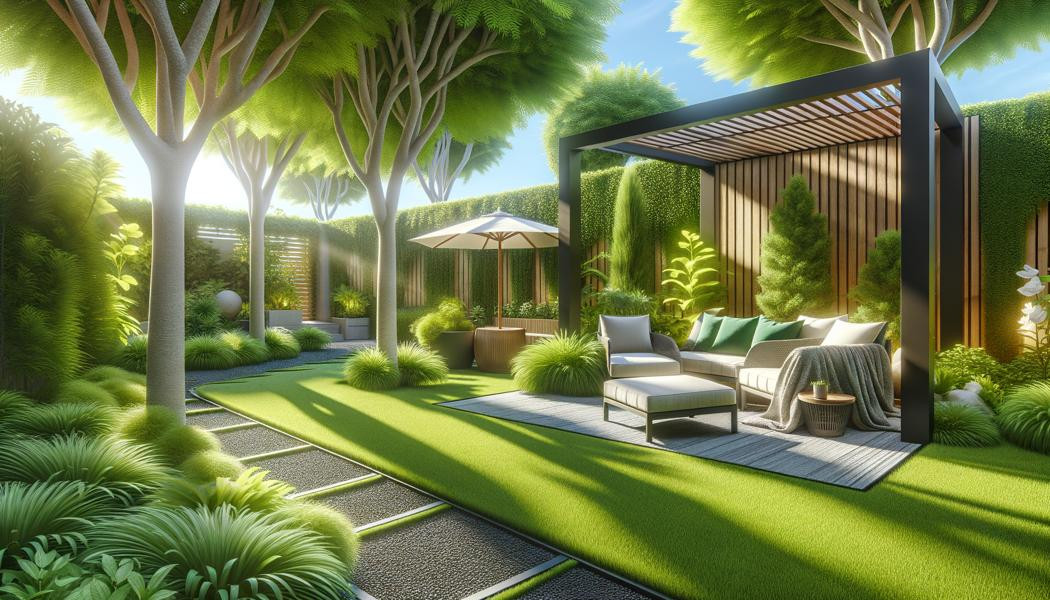
Artificial turf has been booming in recent years, and for good reason. Installing a relaxation corner with this sustainable solution offers numerous benefits. Whether you want to create a play area for your family or a quiet spot to unwind, artificial turf is an option worth serious consideration. In this article, we explore the reasons to choose artificial turf, its advantages over natural grass, the steps to preparing your ground, and much more. Follow our guide to transform your outdoor space into a sustainable peaceful haven.
Need help installing artificial turf? Quickly find a qualified professional on Helplease and enjoy a custom service tailored to all your needs. Discover professionals near you!Summary
- Why choose artificial turf for a relaxation area?
- What are the advantages of artificial turf compared to natural grass?
- How to properly prepare the ground before installing artificial turf?
- What are the key steps to laying artificial turf?
- What tools are needed for installing artificial turf?
- How to ensure proper drainage during artificial turf installation?
- What mistakes should be avoided when installing artificial turf?
- What is the lifespan of artificial turf and how do you maintain it?
- What are the costs associated with buying and installing artificial turf?
- How to choose the right type of artificial turf for your project?
- What are the environmental impacts of artificial turf?
- How to design your relaxation corner with artificial turf?
Why choose artificial turf for a relaxation area?
Artificial turf offers undeniable advantages for anyone looking to create a relaxation spot in their garden or on a terrace. First, one of its main benefits is its low maintenance. Unlike natural grass, which requires regular mowing, watering, and chemical products to keep it in good shape, artificial turf only needs occasional cleaning and occasionally brushing to straighten the fibers. This saves precious time and reduces gardening costs.
Next, artificial turf is extremely weather resistant. Whether it's rain, sun, or snow, it keeps its impeccable appearance and does not deteriorate over time. This resilience makes it an ideal choice for a relaxation area, since you won't have to worry about discoloration or wear.
Lastly, artificial turf is also an eco-friendly option. It eliminates the need for pesticides and herbicides, which helps protect the environment. By choosing to install it, you are also conserving water resources as it requires very little watering. Enjoying a green space while being environmentally conscious has become an increasingly important consideration for many homeowners.
In short, artificial turf stands as a practical and sustainable solution for your relaxation area. Its easy maintenance, durability, and minimal environmental impact make it a smart choice.
Professionals, looking for more clients? Sign up with Helplease today to offer your services and grow your business. Access a large client base in just a click!What are the advantages of artificial turf compared to natural grass?
The choice between artificial turf and natural grass depends on many factors. On one hand, as mentioned above, artificial turf saves significant time. Its minimal maintenance allows users to fully enjoy their outdoor space without the usual gardening hassles.
On the other hand, in terms of safety, artificial turf offers a safer surface, especially for children and pets. Designed to prevent slipping, it is also hypoallergenic and contains no harmful chemicals. Parents of young children, as well as pet owners, will appreciate this type of surface.
Another important aspect is the aesthetic diversity that artificial turf provides. Today, there is a multitude of textures and colors, allowing for customization of the space according to your preferences. Unlike natural grass which can have thin or yellowed patches, artificial turf ensures uniform color and texture across its entire surface.
Finally, the cost of artificial turf is often offset by its longevity. With a lifespan of 10 to 15 years, the initial investment is well worth it. Thus, choosing artificial turf not only saves you long-term maintenance costs but also gives you an attractive and functional space all year round.
How to properly prepare the ground before installing artificial turf?
Ground preparation is a crucial step to ensure the durability and effectiveness of your artificial turf. Start by removing the old lawn or existing vegetation. This may include cutting and extracting roots, guaranteeing your new installation has a reliable and clean foundation.
Next, it is essential to level the ground. Use a rake to remove uneven spots and create a flat surface. This will prevent water stagnation and promote proper drainage. After leveling, it is also recommended to compact the soil to avoid future movement or settling.
For optimal installation, adding a layer of sand or gravel is a good practice. This base helps with drainage and offers an even more stable base for your artificial turf. It is equally important to ensure the ground is free of debris, stones, or other elements that could damage the turf during installation.
Finally, marking the borders of the area to be covered with artificial turf can help guide you during the installation. By following these preparation steps, you ensure your artificial turf will be installed in optimal conditions, thus guaranteeing its longevity and performance.
What are the key steps to laying artificial turf?
Laying artificial turf is a multi-step process, which is essential to follow to achieve a quality result. First, after preparing the ground, it's time to roll out the first layer of turf. Make sure to lay it in the same direction to guarantee uniform appearance.
Next, cut the artificial turf with a utility knife, making sure to leave a slight overlap on the edges. This is necessary to handle the final adjustments. Once the turf is cut, it is essential to secure it well. Use special glue or adhesive strips to seal the joints and prevent shifting.
Once the pieces are joined, the artificial turf must be flattened well. This can be done using a roller or broom to make sure everything is at the correct level and that no air pockets remain. A proper application of infill sand can also help stabilize the artificial turf and stand the fibers upright.
To finish, carry out final checks to ensure everything is in order, including the garden border and the finish of the edges. If you follow each of these steps, your installation of artificial turf will be a success, allowing you to enjoy a beautiful and durable space.
What tools are needed for installing artificial turf?
Before starting to install artificial turf, it is important to gather all necessary tools to make the process efficient. A utility knife is essential to cut the turf to the right dimensions and to allow for adjustments during installation.
Next, a rake and a shovel will be required to prepare and level the ground, as mentioned above. A roller, in turn, ensures good anchoring and flattening of the artificial turf after installation. Also be sure to have adhesive strips and, if needed, special artificial turf glue for the joints.
For safety, gloves are recommended when handling materials, as well as a mask if working with chemicals or glue. Finally, a broom or turf brush is useful for straightening the turf blades after installation, which enhances the final look.
By having all these tools at hand, you will ensure a smooth installation process with no unnecessary delays. Each tool plays a key role in guaranteeing an optimal result so you can fully enjoy your relaxation corner.
How to ensure proper drainage during artificial turf installation?
Ensuring good drainage is essential when installing artificial turf, as this prevents stagnant water problems that can damage the turf and cause mold. Start by creating an appropriate base using a draining material such as gravel or sand. This promotes rainwater flow and prevents accumulation.
Then, pay attention to the slope of your ground. It is recommended to tilt the surface slightly to direct water away from permanent areas like patios or house foundations. A slope of at least 1% is advised to guarantee perfect runoff.
When laying, avoid excessively compacting the soil, as this could also harm drainage. Don’t forget to incorporate perimeter drains if necessary, especially if you live in an area prone to heavy rains. Perforated drainage pipes can help manage excess water.
By following these drainage tips, you will ensure your artificial turf has a long lifespan while enjoying a pleasant relaxation corner, even after bad weather.
What mistakes should be avoided when installing artificial turf?
Preparing and laying artificial turf requires particular attention to avoid certain common mistakes. One of the most frequent is not properly preparing the ground before installation. Uneven or poorly drained soil can lead to imperfections that will affect the appearance and durability of your artificial turf.
It is also important to check the quality of the artificial turf before installation. Choosing a low-quality product can cause early sagging, discoloration, or uneven wear. Take the time to research the product you plan to install.
Another common mistake is neglecting the joints. Making sure they are securely fixed during installation and not leaving any gaps can avoid unsightly spaces and strengthen the overall structure of your artificial turf. Make sure to properly prepare your installation site before starting to avoid these pitfalls.
Avoiding these errors will ensure a successful artificial turf installation, allowing you to fully enjoy your outdoor space.
What is the lifespan of artificial turf and how do you maintain it?
The lifespan of artificial turf is generally between 10 and 15 years, depending on the quality of the product and environmental conditions. To extend its life, it is crucial to ensure regular maintenance. This includes periodic cleaning to remove leaves, debris, and accumulated dirt. Occasional rinsing helps keep your artificial turf looking fresh and clean.
It is also recommended to brush the artificial turf from time to time to straighten the blades and prevent flattening. Regular maintenance not only helps the appearance of your space but also preserves the properties of the turf. Special cleaning products can also be used to remove any stubborn stains.
If any damage occurs, prompt repair is essential. Don’t wait for minor problems to turn into major concerns. Call in professionals if necessary to ensure your artificial turf remains in excellent condition.
In short, simple but regular maintenance will go a long way in keeping the appearance and durability of your artificial turf throughout its life.
What are the costs associated with buying and installing artificial turf?
The cost of purchasing and installing artificial turf can vary considerably depending on several factors. In general, the price per square meter for quality artificial turf is around €20 to €50, but this can go up to €100 for premium products. Artificial turf suppliers often offer different ranges, and it’s important to weigh the cost against the promised quality and durability.
Next, the cost of installation should be factored into your budget. Installation fees can range from €10 to €30 per square meter, depending on the chosen professional and the complexity of your project. If you choose a DIY installation, remember you’ll need to purchase the required tools and materials.
It is also wise to consider long-term maintenance costs, although these are generally lower than with natural grass. Getting a clear and precise estimate of all costs will give you a complete view of your project.
Having a defined budget and comparing prices between different suppliers and professionals will help you make the best choice for your relaxation corner with artificial turf.
How to choose the right type of artificial turf for your project?
Choosing the right type of artificial turf depends mainly on how you plan to use it. For high-traffic areas such as children’s play spaces or pet zones, choose more resistant turfs that can withstand daily wear and tear.
Next, the aesthetic aspect is just as important. Artificial turf comes in different textures and colors, and it’s essential to choose a product that fits with your environment. Take time to compare samples to find the one that best meets your expectations.
Additionally, there are artificial turfs adapted to specific climate conditions, such as those more resistant to heat or shade. Be sure to analyze the conditions of your garden or project area to make the most appropriate choice. The quality of the fiber and the density of the artificial turf are also key factors that influence both appearance and durability.
To help you make your choice, don’t hesitate to read reviews and testimonials from other users. These can provide valuable insights into the real-world performance of different types of artificial turf available on the market.
What are the environmental impacts of artificial turf?
While artificial turf offers undeniable advantages, it is not without environmental impact. On one hand, it helps reduce the use of water resources and eliminates the need for chemicals such as herbicides and pesticides. This contributes to preserving natural resources and biodiversity.
On the other hand, the manufacture of artificial turf requires plastic materials, usually polyethylene, and the production process can carry a significant carbon footprint. Additionally, at the end of its lifespan, artificial turf poses a recycling issue, as not all types are easily recyclable.
Nevertheless, initiatives are emerging to improve the environmental impact of artificial turf. Some manufacturers offer products made from recycled materials and guarantee more eco-friendly production processes.
It is therefore important to consider these aspects when making your decision. Choosing artificial turf with good sustainability credentials and eco-friendly standards can contribute to a sustainable outdoor layout.
How to design your relaxation corner with artificial turf?
Designing a relaxation area with artificial turf offers countless possibilities. First, consider the elements you wish to include in your space. Comfortable garden furniture, sun umbrellas, and lanterns can turn your corner into a true haven of peace.
Add plants as well to create a natural ambiance. The vibrant colors of flowers contrast perfectly with the greenery of artificial turf. Planters and pots can easily be arranged on the artificial turf without causing harm to its surface.
Don’t neglect lighting, which also plays a key role. LED lights around the area can create a warm atmosphere for evenings spent outdoors, while also being economical and environmentally friendly.
Finally, for enhanced comfort, consider soft surfaces like outdoor rugs. These can add a cozy touch to your space and help define different areas within your relaxation corner.
By combining creativity and functionality, you’ll create a relaxation corner with artificial turf that will quickly become a favorite living space.
Conclusion
In conclusion, artificial turf stands out as a modern and practical solution for designing an outdoor relaxation corner. Its many advantages, from low maintenance to its thoughtful environmental impact, make it an increasingly popular choice. From ground preparation to installation, including the choice of materials and space design, every step is crucial to ensuring a result that meets your expectations. By investing in quality artificial turf, you can transform your outdoor area into a real haven of peace while acting responsibly for our environment.
Whether you need quick assistance or want to offer your services, Helplease is your solution! Download the app to connect with qualified experts or find clients in a click, and simplify your daily life! Available on iOS and Android!