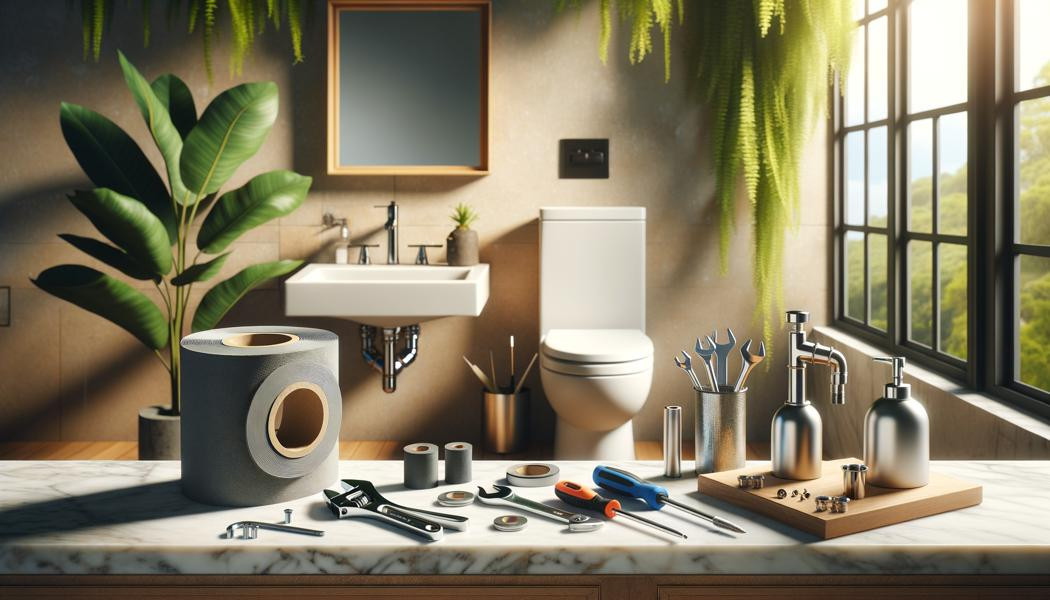
The toilet flush is an essential part of our sanitary systems. However, it often requires repairs, which can raise questions for many homeowners. In this article, we will look at the various aspects of the toilet flush and provide you with 7 practical tips for a long-lasting repair. We will cover how it works, the signs of a breakdown, the tools needed to repair it, and much more. You will also learn when it is better to repair or replace your toilet flush, as well as the associated costs. This article aims to give you all the information you need to ensure your toilet flush works efficiently and durably.
Do you need help repairing a toilet flush? Quickly find a qualified provider on Helplease and enjoy a tailor-made service to meet all your needs. Discover professionals near you!Contents
- What is a toilet flush and how does it work?
- What are the signs that a toilet flush needs to be repaired?
- What tools and materials are needed to repair a toilet flush?
- How to properly disassemble a toilet flush before repair?
- What are common problems encountered with a toilet flush?
- What are the steps to replace a toilet flush float?
- How to repair a faulty seal in a toilet flush?
- How important is regular maintenance of a toilet flush?
- How to prevent leaks after repairing a toilet flush?
- What tips guarantee a long-lasting toilet flush repair?
- Is it better to repair or replace a toilet flush?
- What are the costs associated with repairing a toilet flush?
What is a toilet flush and how does it work?
A toilet flush is a mechanical device designed to remove waste from a toilet. Its operation relies on a simple principle: water, from a tank, is released to rinse the bowl. This mechanism is essential for the proper functioning of our plumbing and plays a crucial role in cleanliness and hygiene.
In general, a toilet flush consists of several key elements, namely a tank, a float, a shut-off valve, and an activation mechanism. When you flush, a valve opens, allowing water to quickly pour into the bowl. The amount of water used may vary, but a good system should consume efficiently while ensuring proper rinsing.
Knowing how your toilet flush works is essential, as it allows you to more easily identify potential issues or failures. Basic knowledge of its mechanism will also help you identify specific problems you might encounter during repairs.
It is therefore recommended to familiarize yourself with your toilet flush’s setup and ask questions if you are unsure about how it operates. This will give you the tools to carry out long-lasting repairs.
The essential components of a toilet flush
A toilet flush is generally composed of several elements. The tank, which stores water, is the first part to examine. The float regulates the amount of water in the tank by rising or falling depending on the water level. The shut-off valve plays an essential role by controlling incoming water, while the activation mechanism allows water to be released for rinsing.
The water cycle in a toilet flush
When a toilet flush is activated, water is routed to the bowl, then it refills again. Knowing this cycle will not only help you better understand your system but also detect leak problems.
What are the signs that a toilet flush needs to be repaired?
Several signs may indicate that your toilet flush is not functioning properly. First, visible leaks around the tank or under the bowl are a worrisome sign and should be dealt with immediately to avoid further water damage.
Next, if you notice that the flush does not refill properly after being used, this may mean the float is faulty or the shut-off valve is blocked. This issue should be checked to prevent further plumbing problems.
Another sign to watch for is any unpleasant odor coming from the toilet. This may be related to a flush that doesn’t empty adequately or to other plumbing issues.
Finally, a toilet flush that requires several pulls for proper rinsing is also a sign of malfunction that needs repairs.
Leaks: a major concern
Leaks around your toilet flush can cause significant damage to your plumbing. Furthermore, invisible leaks can lead to exorbitant water bills. This represents a real loss of money in your monthly budget. Taking proactive action regarding repairs can save you not only money but also a lot of hassle.
Persistent noises inside the tank
If you regularly hear running water noises coming from the toilet flush, this may indicate that the float or flush valve is faulty. In most cases, simple repairs can resolve this issue.
What tools and materials are needed to repair a toilet flush?
Before undertaking repairs, it is important to gather the necessary tools and materials. For most flush repairs, you will need an adjustable wrench to unscrew the connections, a screwdriver to remove screws, and a pair of gloves to protect your hands from dirt.
In addition, it can be helpful to have a bucket handy to collect any excess water while working on the tank. New seals and perhaps a new float or flush mechanism may also be needed depending on the repair type.
It may be wise to consult your toilet flush’s manual to learn the specifics of your model. Each system has its own characteristics and may require particular materials for optimal operation.
Anticipating your needs for major repairs will save you later inconvenience because you’ll be well prepared for any situation that may arise.
Basic tools for repairs
Having the basic tools for toilet flush repairs is essential. So, make sure to have equipment such as wrenches, screws, and a bucket to collect any possible debris.
Key materials to keep on hand
New seals are essential to ensure a tight fit during a repair. Possibly, silicone for the tank or special glue can also be useful.
How to properly disassemble a toilet flush before repair?
To repair a toilet flush effectively, it is essential to know how to take it apart. Start by turning off the water at the source, then empty the tank by flushing. This will prevent a mess when you open the mechanism.
Next, use your adjustable wrench to remove the visible fastenings of the tank. Be careful not to force the parts so as not to break them. Take pictures if needed to remember the order of the components when reassembling.
Once the tank is removed, examine the different parts of your toilet flush to identify those that need replacement. This step is crucial for an effective repair.
Also be sure to remove and inspect the seal found between the tank and the bowl, as this is often a failure point.
Step-by-step removal procedure
The first thing to do is turn off the water, then empty the tank. With your wrench, gently unscrew the tank's elements to detach it from the bowl. This will give you full access to the parts needing replacement.
Inspect before you repair
Once disassembly is complete, it’s wise to quickly examine everything for signs of damage. This will help you identify exactly what needs to be repaired or replaced.
What are common problems encountered with a toilet flush?
In general, toilet flush problems are often related to leaks, strange noises, or insufficient rinsing performance. For example, a poorly adjusted float is a common cause of a leaking toilet flush.
Flush valves can also wear out, resulting in a failure to rinse the bowl correctly. In some cases, the faucet or other internal mechanisms can get stuck and create annoying noises.
Poor initial installation can also be the source of these problems, a strong reminder of the importance of a job well done from the outset.
Identifying these problems as soon as they appear allows you to act quickly to avoid more expensive repairs in the future.
Leaks and malfunctions
Leaks can occur for several reasons, whether it’s a poorly adjusted float or worn out seals. It is therefore essential to regularly check these elements.
Excessive noise
If your toilet flush makes strange noises, it could indicate a problem with the valves. By checking and adjusting these components, it is often possible to eliminate these noises.
What are the steps to replace a toilet flush float?
Replacing a float is a common and relatively simple operation. The first step is to turn off the water and empty the tank. Then, avoid spills by removing the damaged float from its holder.
Once disconnected, choose a new float type that matches your toilet flush model. Next, install the new float while adjusting its level correctly to ensure proper operation.
Don't forget to check the tightness of the joints after replacement to prevent future leaks.
Once the new part is installed, turn the water back on and test the system to verify everything is working correctly.
Key replacement steps
Replacing a float is generally done in three steps: removing the old part, installing the new float, and checking its operation. This is a job many homeowners can complete themselves without excessive noise!
Performance test after replacement
After replacement, it’s important to test the system to ensure the float works properly. Fill the tank and flush to see if rinsing is optimal and leak-free.
How to repair a faulty seal in a toilet flush?
The seal is a key element of your toilet flush. To repair a faulty seal, start by turning off the water and emptying the tank to locate the faulty part. Once found, simply remove it, clean the area, and insert a new seal.
Make sure the new seal is a perfect fit. Reassemble everything, checking at each step that the parts are correctly positioned for a good seal.
Seals can become worn or deteriorate over time, and neglecting this problem can cause major leaks with harmful consequences.
Take the time to examine and regularly maintain this part for longer toilet flush life.
Seal replacement steps
The replacement of a faulty seal typically involves unscrewing, cleaning, and replacing the old part with a new one. Make sure to choose suitable materials for a durable operation.
Post-installation check
Once the new seal is in place, test the installation for any potential leaks. This will ensure your toilet flush is operational again.
How important is regular maintenance of a toilet flush?
Regular maintenance of your toilet flush is essential to prevent costly repairs. By carrying out periodic checks, you can detect problems before they become serious, saving you both time and money in the long run.
Keeping your installations in good condition also contributes to the durability of your system. Repairs can be cumulative, and neglecting a small leak today could lead to a major issue tomorrow.
Besides extending the life of your equipment, regular maintenance may also improve the efficiency of your toilet flush, thus reducing your water consumption and related bills.
So, don’t wait for a problem to arise before paying attention to your toilet flush! Take the time to carry out these simple checks to keep your system in good condition.
The benefits of preventive maintenance
Regular maintenance can save you from having to replace a whole toilet flush, which is a significant saving. By ensuring all seals and mechanisms are in perfect condition, you will prolong the life of your installation.
Maintenance tips to follow
It is recommended to regularly inspect your system for any visible leaks and to check the float mechanism. Preventive maintenance can make a real difference and offer you long-term peace of mind.
How to prevent leaks after repairing a toilet flush?
To prevent leaks after a repair, make sure to have installed each part correctly, carefully checking every seal. Ensuring that all components are firmly fixed plays a crucial role in the tightness of your system.
Don’t forget to do a pressure test on your toilet flush after completing the repair. This can reveal any flaws you might correct immediately.
Also, it is wise to regularly review the system to ensure repairs are still effective and everything is working as expected.
Ongoing maintenance will bring you not only peace of mind but also considerable savings by minimizing leak risks in the future.
Effective practices to prevent leaks
By regularly checking seals and internal mechanisms, you can minimize the risk of leaks. Don’t let time take its toll on a seal; replacing worn parts is preferable to facing an unpredictable leak.
Essential post-repair checks
Always check the tightness of connections after each repair, and try not to overtighten so as not to damage the parts. Keep an eye on the weather to avoid the expansion and contraction of material that could affect your toilet flush and cause leaks.
What tips guarantee a long-lasting toilet flush repair?
To guarantee a long-lasting repair for your toilet flush, start by investing in high-quality parts. This increases each component’s lifespan and reduces the frequency of required repairs.
Also, be sure to follow the manufacturer's instructions during repairs. This ensures that all parts are installed correctly and operate under normal conditions.
Regular preventive maintenance is also key to longevity. Schedule periodic inspections to keep an eye on your toilet flush’s condition. Don’t be negligent—even if everything seems fine, minor issues can evolve into big troubles.
Finally, whenever possible, call in professionals for complex repairs. They often provide long-term solutions that ensure durable use of your toilet flush.
Quality materials
Use good-quality rubber seals and sturdy floats, as these are often the most wear-prone parts. Investing a little more in these parts can save you a series of repairs.
The role of professional expertise
Sometimes, calling a professional plumber for a repair can be beneficial. Their expertise allows them to detect problems invisible to the untrained eye, ensuring optimal safety and maintenance of your toilet flush.
Is it better to repair or replace a toilet flush?
This depends on several variables, including the age of your toilet flush and the extent of the required repairs. If your flush is relatively new and repairs are not too costly, repair is often the best solution.
However, if your toilet flush is frequently faulty and older, replacement may be wiser. New toilet flushes often come with integrated savings features that reduce your water bills over the long term.
A realistic assessment of future maintenance costs compared to investing in a new system is essential to making the right decision.
For this, consult a professional if in doubt. They can help you determine the best course of action for your specific situation.
Criteria to consider
It is essential to weigh the cost of repairs against that of a replacement. If the repair costs approach the price of a replacement, it is often wiser to choose a new model.
The benefits of a new installation
A new model may feature efficiency improvements, thus reducing costs on your water bills, which often offsets their initial costs.
What are the costs associated with repairing a toilet flush?
The costs related to a repair of a toilet flush can vary significantly. In general, minor repairs such as replacement of a float or seal can cost less than 25 to 100 euros depending on the parts and labor.
More complex repairs, such as the complete replacement of a flush mechanism, can reach 150 to 400 euros, depending on the area and the plumber’s rates.
Take the time to research and get quotes from various providers. This will help you find the best value for your service.
In summary, good management of repair costs will spare you unpleasant surprises while ensuring your toilet flush functions in the long term.
Types of repairs and their costs
Be sure to record every type of repair done on your toilet flush to track future costs. This will also help you better plan your budget as repairs become necessary.
Plumbing quotes
Always request several estimates to compare costs. This will give you a clear perspective on market prices and minimize the chances of overspending.
Conclusion
In conclusion, the toilet flush is an essential part of your plumbing, and it is crucial to know how it works to perform long-lasting repairs. By following the advice in this article, you can not only maintain your toilet flush but also know when it is necessary to make repairs or carry out a full replacement. To maintain maximum efficiency while avoiding unexpected costs, regular maintenance and frequent checks are crucial. Remember that professionals are available to assist you if needed.
Whether you need quick help or want to offer your services, Helplease is your solution! Download the app to connect to qualified experts or find clients in just one click, and simplify your daily life! Available on iOS and Android!