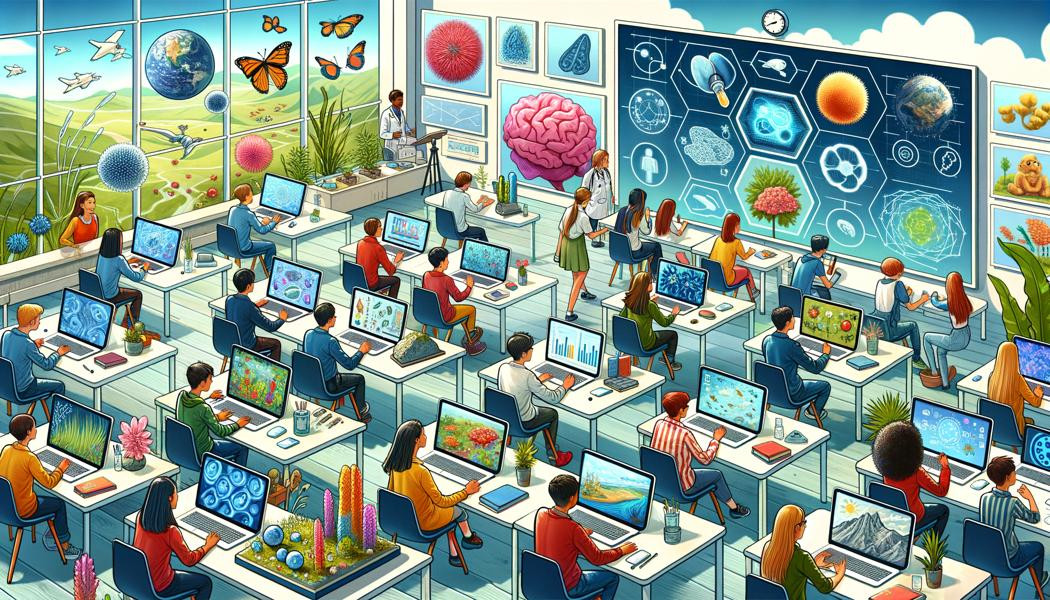
In an increasingly digital world, digital tools are radically changing the way we learn, especially in the field of life and Earth sciences (SVT). This article explores the impact of these tools on scientific learning, examining how they transform teaching methods, boost student engagement, and facilitate access to educational resources. We will also analyze the challenges faced by teachers in their integration and assess student feedback on these new tools. In summary, this article aims to determine the growing importance of digital tools in modern scientific education.
Do you need help improving your learning in life and Earth sciences? Quickly find a qualified provider on Helplease and benefit from a tailor-made service to meet all your needs. Discover professionals near you!Summary
- How are digital tools transforming the learning of life and Earth sciences?
- What are the main digital tools used in SVT teaching?
- How do technologies promote student engagement in SVT?
- What are the advantages of online learning platforms for studying science?
- How do digital simulations enhance understanding of scientific concepts?
- What challenges do teachers face when integrating digital tools in SVT?
- How can we assess the impact of digital tools on student success in SVT?
- What feedback do students have on the use of digital tools in SVT?
- How do digital tools facilitate access to scientific resources?
- What is the role of social media in learning life and Earth sciences?
- How can teachers be trained to use digital tools effectively in SVT?
- What emerging trends are there in the use of digital tools in science education?
How are digital tools transforming the learning of life and Earth sciences?
Digital tools play an essential role in transforming education in life and Earth sciences. They enable an interactive and dynamic approach, encouraging students to actively engage in their learning. Thanks to digital platforms, teachers can offer a variety of content, ranging from interactive educational videos to simulations and online exercises. These tools do not merely disseminate information; they also foster practical and collaborative learning, allowing students to work together on scientific projects in real time, regardless of their geographic location.
Interaction with these tools also allows students to develop critical skills, such as analytical thinking and problem solving. For example, a digital simulation on ecosystems can lead students to explore the effects of environmental changes on biodiversity. This dynamic immersion not only stimulates their curiosity but also gives them a better understanding of scientific concepts.
The speed of access to information offered by digital tools frees students from traditional teaching, enabling them to search for information and process it autonomously. This strengthens their autonomy and responsibility for their own learning while developing their research skills and critical evaluation of information sources.
In summary, digital tools are reshaping not only how science is taught but also how it is learned, breathing new life into science education and allowing students to become fully immersed in the subject.
Professionals, are you looking for more clients? Sign up on Helplease today to offer your services and grow your business. Access a wide client base in just a few clicks!What are the main digital tools used in SVT teaching?
The teaching of life and Earth sciences is greatly enriched by a range of digital tools that facilitate not only teaching but also learning. Among the most commonly used tools are simulation software that model complex biological and geological phenomena, allowing students to explore concepts that are difficult to apply in a traditional classroom context. For example, applications like PhET and BioDigital offer attractive visual representations of scientific concepts, making learning more accessible and engaging.
Online learning platforms also represent a significant part of this digital educational ecosystem. Sites like Moodle or Google Classroom allow teachers to centralize their courses, share resources, and track student progress. This creates a collaborative learning environment where students can interact with both the content and other learners more effectively. These platforms also offer integrated assessment tools, making it easier to manage assignments and provide feedback to students.
Other tools, such as interactive quizzes and online forums, encourage students to actively participate in their learning expectations. Tools like Kahoot! and Quizlet add a fun aspect to learning, which helps maintain student interest and reinforce their knowledge through repetition and interaction.
In addition to these tools, the use of augmented reality and virtual reality is beginning to transform the pedagogical approach in SVT. These technologies allow students to explore scientific environments, observe cellular structures, or traverse geosystems without leaving the classroom, fostering complete immersion in the topics covered.
Interactive simulations
Interactive simulations are undoubtedly among the most effective tools used in SVT teaching. They allow students to experiment with concepts in real time and observe the results of their actions, which is especially useful when studying biological and ecological processes. For example, a simulation of the effect of different environmental factors on a plant's growth enables students to visualize concepts in a tangible and contextual manner. These virtual experiences provide practice opportunities that would often not be feasible in a laboratory due to various logistical constraints.
Collaboration platforms
Online collaboration platforms play an essential role in SVT teaching, as they facilitate interaction between students and teachers through discussion forums, real-time comments, and resource sharing. This encourages cooperative learning since students can work together on projects, exchange ideas, and support each other in their studies. Online collaboration also allows teachers to provide constructive feedback, improve student motivation, and focus learning on cooperation.
How do technologies promote student engagement in SVT?
Student engagement is a crucial aspect of learning in life and Earth sciences, and modern technologies are powerful catalysts for it. The use of digital media makes lessons more dynamic and interactive, thereby capturing students' attention. For example, interactive presentation tools such as Prezi or Nearpod turn lessons like photosynthesis or food chains into visual and interactive experiences that make retaining information easier.
Furthermore, technologies offer methods for empowering learning that increase student motivation. Digital tools allow them to choose their own pace, learning resources, and even the topics they wish to explore deeper. This contributes to a sense of control and autonomy, which is essential for stimulating students' interest and natural curiosity in science.
Online collaborative projects and discussion forums also add a social aspect to learning, promoting peer discussions about scientific problems and research outcomes. This type of social engagement is particularly beneficial because it not only improves understanding of the subjects covered but also strengthens essential skills such as communication and critical thinking.
Finally, technologies such as educational apps and games create a fun and engaging learning approach, further stimulating student engagement. These attractive learning formats can turn difficult scientific concepts into fun and interactive challenges.
Personalized learning
Technology makes learning personalized, offering students the ability to work at their own pace and according to their interests. Adaptive learning platforms, for example, adjust content based on student performance, helping them focus on areas that need improvement. This personalization strengthens student engagement and interest, as everyone can find a learning path that suits them best.
Instant feedback
Many digital tools provide students with real-time feedback on their work, even in virtual lab environments. This immediate feedback enables them to quickly understand where they can improve and what they already do well. Instant feedback contributes to more engaged learning because students are more likely to adjust their approaches based on the responses they receive. This also gives them the opportunity to make quick adjustments and focus on their weaknesses, maximizing their learning process.
What are the advantages of online learning platforms for studying science?
Online learning platforms offer a multitude of benefits for studying life and Earth sciences. First, these platforms are accessible at any time, allowing students to follow their courses and consult educational resources at their convenience. This flexible access is especially beneficial for students with busy schedules or various responsibilities.
Additionally, online learning platforms often offer a wide range of content, from explanatory videos to interactive quizzes. This variety of formats helps students better absorb information and view it from different angles, which can strengthen their understanding of concepts.
The integrated analytics tools in these platforms also allow teachers to track student progress in real time. Thanks to collected data, teachers can adapt their teaching approach according to students' difficulties, thus creating a more targeted and effective learning experience.
Finally, peer interaction fostered by these platforms enriches learning. Discussion forums, for example, allow students to ask questions, share ideas, and exchange knowledge. This creates a sense of community while reinforcing collaborative learning, which is essential in scientific education.
Increased accessibility
Online learning platforms make scientific education accessible to a wider audience. No matter their geographic location, students can access quality resources and available teachers to guide them. This helps reduce inequality in education and allows everyone to pursue their learning in SVT.
Pedagogical richness
These platforms allow each student to benefit from rich and diverse material. Whether it is interactive simulations, educational games, or lecture videos, the diversity of resources caters to different learning styles and stimulates students' interest in science.
How do digital simulations enhance understanding of scientific concepts?
Digital simulations are a valuable tool in the teaching of science as they offer a visual and interactive representation of complex concepts. For example, models of chemical reactions or ecological processes help students visualize not only what is happening in these systems but also the impact of environmental variables on these processes. This dynamic approach makes it easier to understand and integrate scientific concepts.
Moreover, simulations allow students to experiment without the risk of catastrophic errors that could occur in laboratory experiments. This means they can test different hypotheses and observe various scenarios, thus promoting learning through trial and error, which is crucial in the scientific field. Students can explore unexpected results and learn to provide explanations and draw conclusions based on their observations.
By integrating these simulations into their learning, students can not only master theoretical concepts but also develop practical skills such as critical thinking and problem-solving, as they need to analyze the results of their experiments and reflect on their relevance.
In summary, digital simulations not only enhance understanding of scientific concepts but also encourage students to engage actively and meaningfully in their learning.
Safe experimentation
Digital simulations also provide a risk-free experimental environment, which is especially essential in fields where laboratory experiments can be dangerous or costly. Students can thus learn to manipulate variables without fear of accidents, enriching their practical training without the potential drawbacks of physical laboratories.
Real-time observation of phenomena
These tools allow exploration of scientific phenomena in real-time and in a controlled environment, facilitating in-depth understanding of complex interactions within the studied systems. Students can observe the consequences of their actions instantly, allowing them to better understand cause and effect links. This real-time approach offers true immersion in the subject, reinforcing students' interest and curiosity about science.
What challenges do teachers face when integrating digital tools in SVT?
Integrating digital tools into the teaching of life and Earth sciences is not without its challenges. Firstly, teachers may encounter difficulties related to their own technical expertise. Many educators do not receive adequate training on digital tools, making them reluctant to use or integrate them into their lessons.
Furthermore, some schools may not have the necessary infrastructure to support these technologies, such as reliable internet access or adequate equipment. This situation creates educational inequalities, where some students fully benefit from digital tools while others do not have this opportunity.
Another major challenge is resistance to change. Some teachers may be reluctant to change their traditional teaching methods, fearing that integrating technologies will further complicate the curriculum or harm class dynamics. Overcoming this resistance requires constant effort and dedicated training programs to ensure a successful transition to modern, digital teaching methods.
Finally, it is essential to guarantee data protection and security when using digital tools. Teachers need to be aware of potential privacy risks for students and the management of sensitive information.
Teacher training
Teacher training is essential for optimal integration of digital tools. Professional development workshops and training sessions can help them acquire technology skills, become familiar with applications, and learn how to organize interactive activities that incorporate these tools. This will enable them to feel more confident using technologies in the classroom.
Access to infrastructure
Ensuring that all schools are equipped with adequate technological infrastructure is crucial so all students can access the opportunities offered by digital tools. This includes not only internet access but also the availability of computers, tablets, and other necessary equipment. Government programs and private initiatives can play a vital role in ensuring that all schools benefit from these resources.
How can we assess the impact of digital tools on student success in SVT?
Assessing the impact of digital tools on student success in SVT requires a holistic approach that considers various performance indicators. Teachers can use online evaluation tools, such as quizzes and formative tests, to track students' progress and level of understanding over time. These assessments make it possible to identify areas for improvement and provide constructive feedback to students.
Additionally, studies and research on the use of digital tools in the classroom can provide valuable data on the long-term impact of these technologies on academic success. The results of these studies help analyze the evolution of student skills and their engagement in courses. This type of research can also inform educational policies and professional development initiatives for teachers.
Student feedback is also a valuable source of information for measuring the effectiveness of digital tools. By gathering testimonials and conducting satisfaction surveys, students can express what works well and the challenges they face. This information is essential for continuously adapting teaching methods and utilized tools to better meet students' needs.
In summary, to effectively assess the impact of digital tools on student success, it is essential to combine quantitative data, qualitative data, and student feedback to obtain a comprehensive view to guide teaching practices.
Ongoing assessment
Ongoing assessment is a valuable approach. It allows tracking student progress by using digital learning tools that provide real-time feedback on their performance. At each stage, teachers can adjust their teaching methods and implement targeted interventions to meet students' specific needs.
Using data for improvement
Data collected from student performance can be analyzed to identify trends and areas for improvement. Schools can thus learn from current practices and adapt the use of digital tools to optimize learning. This approach maximizes the positive impact of technology on student success in science.
What feedback do students have on the use of digital tools in SVT?
Student feedback about the use of digital tools in life and Earth sciences is generally positive. Many students report that they find these tools engaging and appreciate the variety of learning formats provided. Interactive simulations and online learning platforms are cited as particularly effective in making lessons more stimulating and interesting.
However, some students express concerns about information overload and time management. When confronted with a variety of digital resources, it can be difficult for them to make informed choices on how to learn, which can cause one or more frustrations. Teachers therefore need to be attentive to these concerns and encourage regular monitoring.
Furthermore, students highlight the importance of digital tool accessibility. Many reiterate that the tools available on learning platforms must be easy to use and accessible from various devices. This accessibility is crucial so that all students can benefit from these resources.
Ultimately, this feedback is essential for guiding teaching decisions and helping optimize the use of digital tools in SVT.
Impact on motivation
Many students find that digital tools increase their motivation to study SVT. The interactivity and engaging nature of the tools help create a positive learning environment, which encourages students to invest more in their studies. The fun nature of some digital tools, such as quizzes and educational games, also helps make scientific topics more attractive and accessible.
The role of pedagogical support
Students specify that the pedagogical support provided by teachers plays a major role in their perception of digital tools. When teachers are trained and comfortable with these tools, students receive the guidance they need to use them better. This strengthens their confidence in using technology, improving their overall learning experience.
How do digital tools facilitate access to scientific resources?
Digital tools are revolutionizing access to scientific resources by making information more accessible than ever. Students can explore a multitude of educational resources online, whether through scientific articles, videos, podcasts, or research databases. This wealth of information opens new avenues for research and independent learning.
Digital libraries allow students to access books and articles they would not necessarily find in their local school libraries. Access to online scientific journals encourages a better understanding of contemporary work in the field of life and Earth sciences.
Furthermore, many easy-to-use digital tools are designed to synthesize and summarize scientific research, helping students quickly get familiar with complex topics. These resources can also play a key role in developing strong research skills, encouraging students to navigate, evaluate, and apply relevant knowledge critically.
In short, the integration of digital tools in SVT teaching helps remove barriers that stand between students and scientific resources, thus creating unlimited learning opportunities.
Access to real-time information
Digital tools allow students to stay informed about the latest discoveries and advances in the scientific field. Thanks to platforms that aggregate information, students can follow scientific news and access recent research findings with a single click. This fosters a dynamic and contemporary learning environment that reflects the rapid evolution of scientific knowledge.
Enhancing local and community resources
Digital tools also enable students to access valuable local and community resources. Scientists and institutions can share research projects and data online, facilitating collaboration within the educational and scientific community. This creates a link between the school environment and the real world, making science more relevant for students.
What is the role of social media in learning life and Earth sciences?
Social media plays an increasingly central role in learning life and Earth sciences. They allow students to connect with each other, share ideas, and collaborate on joint projects. These platforms also offer opportunities for interaction with experts and scientists, making scientific learning more accessible and engaging.
Discussion groups on platforms such as Facebook or Reddit allow students to ask questions and exchange knowledge about various scientific topics. This type of interaction encourages collaborative online learning and student engagement within communities interested in science.
Furthermore, social media is an excellent way to disseminate scientific knowledge. Teachers can use these platforms to share resources, articles, and interesting videos with their students. Through this means, students can not only get informed but also stay updated on the latest trends and discoveries in the field of science.
Finally, social media helps develop students' technological fluency, which is essential in today's world. By navigating these platforms, students discover technological tools they can use in their studies and future professional lives.
Building a professional network
Social media also opens doors to professional connections. Students can interact with scientists and professionals in the field, which can provide mentoring and internship opportunities. By establishing these relationships, students can consider careers in science with a more informed perspective.
Developing scientific communication skills
By participating in discussions and sharing information on social media, students also develop their scientific communication skills. Explaining complex concepts to a general audience helps strengthen their understanding and improve their ability to convey information clearly. This can prove to be a valuable asset throughout their academic and professional careers.
How can teachers be trained to use digital tools effectively in SVT?
Teacher training in the use of digital tools is crucial to ensure successful integration into science teaching. Training workshops and professional development programs can be designed to help teachers become familiar with available technologies and learn to integrate them effectively into their teaching practices. These sessions should focus on designing interactive classes and using educational applications to maximize student engagement.
Moreover, it may be beneficial to create professional learning communities in which teachers can share experiences, strategies, and resources. Teachers should be encouraged to share both their successes and challenges in using digital tools, enriching the collective experience and enabling everyone to learn from each other.
Practical training should also include case studies on the effective use of digital tools in other science classes, to give teachers concrete examples to follow. Collaborations with educational technology experts can also bring fresh ideas and approaches, making teaching more relevant and suited to evolving student needs.
Finally, ongoing support and regular assessment of teachers' technological skills are vital to ensure sustainable integration of digital tools. Regular training and professional development programs can help keep teachers informed about the latest technological trends and best practices in scientific education.
Integration of technologies into initial training
Initial teacher training in SVT should also include a component on the use of digital tools. This will allow future educators to feel comfortable with these technologies from the start of their careers and instill their appropriate use in the classroom. Hands-on workshops during these training sessions, focused on collaborative exercises using digital tools, help embed these skills from the outset.
Mentoring and observation
Setting up mentoring programs where experienced teachers use and integrate digital tools in class can also be beneficial. New teachers can observe these practices in action and discuss them with colleagues to better understand how to use these technologies to enhance their own teaching. This creates a culture of collaborative learning and innovation within schools.
What emerging trends are there in the use of digital tools in science education?
Science education is evolving rapidly with the rise of new technologies and digital tools. Among emerging trends, the use of artificial intelligence for personalized learning is particularly promising. Applications can analyze student performance and suggest content tailored to their individual needs, thus creating a customized learning experience.
Additionally, augmented reality and virtual reality are increasingly present in science education, offering immersive ways to explore complex concepts. This technology allows students to visualize biological or geological systems in three dimensions, interact with invisible structures, and conduct experiments in a virtual environment without constraints.
Online courses continue to grow, with increasingly interactive options. MOOC platforms, which offer courses led by prestigious universities, are gaining in popularity, making science education accessible to a broad and diverse audience.
Finally, the influence of social media and collaboration platforms continues to grow, with a dynamic of community learning that encourages the sharing of knowledge and ideas, thus reinforcing student engagement and motivation to learn.
Hybrid learning
Hybrid learning models, combining traditional teaching and online learning, are becoming increasingly common. This approach allows teachers and students to benefit from the advantages of both worlds, promising a dynamic and adaptable learning method. This flexibility helps integrate digital tools into the school routine while retaining the human contact essential to learning.
Data collection for continuous improvement
The collection and analysis of learning data from digital tools enable educators to identify trends and learning behaviors, thus promoting continuous improvement of teaching practices. These data also provide an opportunity to personalize the learning experience for each student, maximizing academic success and strengthening interest in life and Earth sciences.
Conclusion
Ultimately, the impact of digital tools on scientific learning in SVT is undeniable. They transform teaching methods, increase student engagement, and facilitate access to new educational resources. Challenges such as teacher training and infrastructure access must be overcome to ensure successful integration of these tools. Student feedback is essential for adapting teaching practices and improving the learning experience. As technological trends continue to emerge, it is crucial for the education system to evolve as well, to meet the needs of a new generation of learners.
Whether you need quick help or want to offer your services, Helplease is your solution! Download the app to access qualified experts or find clients in one click, and simplify your daily life! Available on iOS and Android!