Summary
- What are the common mistakes when painting a staircase?
- Why is it important to properly prepare your staircase before painting?
- What types of paint are best suited for a staircase?
- How do you choose the ideal color to paint your staircase?
- What tools are necessary to paint a staircase flawlessly?
- How can you avoid drips and imperfections when painting?
- What are the recommended painting techniques for staircases?
- How do you ensure good adhesion of paint on wood or metal surfaces?
- What is the optimal drying time for staircase paint?
- How do you maintain the paint on your staircase once finished?
- What are the consequences of poor paint application on a staircase?
- How do you fix painting mistakes on a staircase?
Painting a staircase may seem like a simple task, but many mistakes can occur if you don't take the necessary precautions. In this article, we will discuss the common mistakes to avoid in 2025 when painting a staircase, as well as the importance of preparation, the choice of paint, the necessary tools, and much more. You will find practical tips to ensure an impeccable and long-lasting finish.
Need help painting a staircase? Quickly find a qualified provider on Helplease and enjoy a tailor-made service to meet all your needs. Discover professionals near you!What are the common mistakes when painting a staircase?
Painting a staircase may seem easy, but several mistakes are common. The first mistake is choosing an unsuitable paint. Using regular paint instead of paint specifically designed for heavily used surfaces can lead to premature wear. Moreover, not properly preparing the surface before painting can also cause adhesion problems, which affects the durability of the coating.
Another frequent error is not respecting the drying time between coats. Applying a new coat before the previous one is completely dry can cause drips and imperfections. It is therefore crucial to follow the drying times specified by the manufacturer for each product used.
The lack of protection for surrounding areas is also a common mistake. Many amateur painters forget to cover the walls and floor, which can lead to splashes and stains that are difficult to clean. Lastly, working under non-optimal conditions, such as high humidity or very low temperatures, can compromise the quality of the application.
By avoiding these mistakes, you ensure that your staircase painting project goes smoothly. Proper preliminary work and attention to detail are essential for a satisfactory result.
Professionals, looking for more clients? Sign up on Helplease today to offer your services and grow your business. Access a large client base in just a few clicks!Why is it important to properly prepare your staircase before painting?
Preparation is a crucial step in the process of painting a staircase. Proper preparation ensures not only the durability of the paint but also an impeccable aesthetic finish. Without adequate preparation, paint may flake or wear away quickly, leading to additional costs for a new application.
By thoroughly cleaning the surface, you remove dust, dirt, and remnants of old paint, creating an ideal environment for optimal adhesion of the new paint. In addition, repairing imperfections such as cracks and chips before painting ensures a smooth and even surface.
Furthermore, preparation allows you to choose the right products suited to your staircase's specific needs. Wooden staircases, for example, require different products than those meant for metal surfaces. By understanding the specifics of each material, you can avoid costly mistakes.
Ultimately, taking the time to properly prepare the staircase contributes to safety. A poorly painted staircase can become slippery and dangerous. Using non-slip paints and ensuring all the proper finishes not only guarantees an aesthetic result but also the safety of users.
What types of paint are best suited for a staircase?
The choice of paint for a staircase is crucial for the quality and longevity of the result. Water-based acrylic paints are often recommended as they are easy to apply, dry quickly, and emit few volatile organic compounds (VOCs). This makes them an excellent choice for interior projects.
However, for heavily used or outdoor staircases, oil-based paints or specific floor coatings can provide extra resistance to wear. These products are more durable but require longer drying times and more meticulous preparation.
Non-slip paints are also an option to consider to prevent accidents, especially in homes with children or elderly people. These paints provide a specific texture that improves grip, which is essential for safety.
Lastly, don't forget to consult the manufacturer for specific recommendations regarding your type of staircase, as each material may require a different approach when it comes to painting.
How do you choose the ideal color to paint your staircase?
Choosing the color for a staircase may seem simple, but it deserves thorough consideration. The staircase is often a central element in a house, and the chosen color can influence the overall look of the space. To ensure harmony, it is essential to take into account the colors of the surrounding walls and floor. A color that matches these elements can create a cohesive effect.
Neutral colors, such as white, grey, or beige, are often popular for their timeless look and ability to visually enlarge the space. On the other hand, if you want to add a personal touch, brighter colors or patterns can be considered. Colors such as navy blue or emerald green can bring unique sophistication to the staircase.
Another important factor is the use of the staircase. A staircase in a busy living space may require a color that hides wear and dirt, while one in a less-used area may allow for more delicate looks.
Don’t forget to sample paint on small areas to visualize the result before the final application. By painting small sections of the staircase, you can better see how the color interacts with light and the environment.
What tools are necessary to paint a staircase flawlessly?
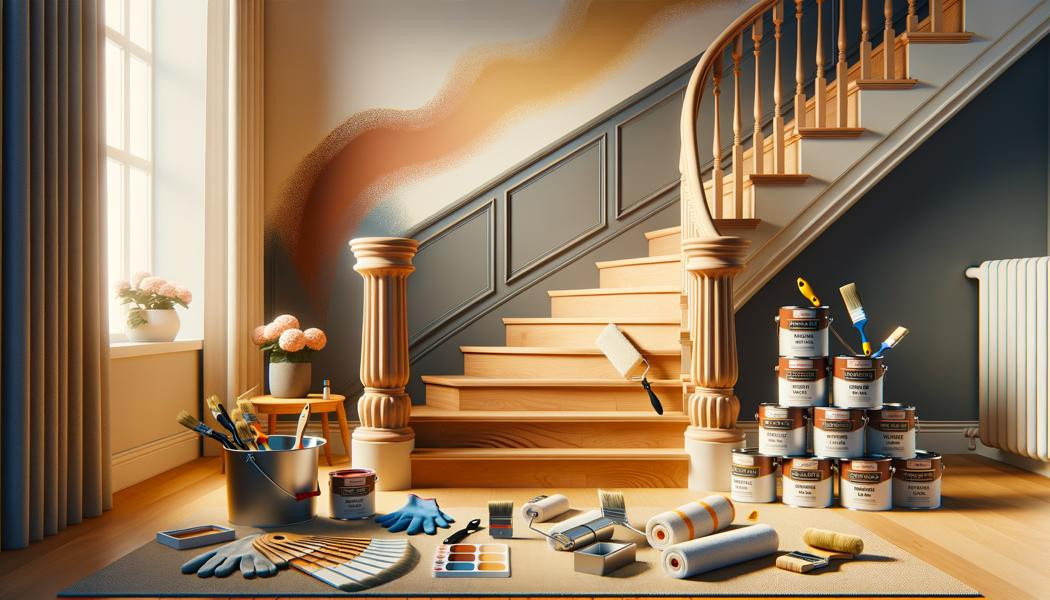
Having the right tools is essential for a successful painting project. For painting a staircase, start with quality brushes and rollers. Angled brushes are perfect for corners and hard-to-reach areas, while rollers make it easy to cover larger surfaces efficiently.
A paint tray is also essential for pouring the paint and dipping the roller. Make sure you also have a grid to remove excess paint and prevent drips.
Other needed tools include masking tape for edges, cloths to clean up splashes, and possibly a putty knife for preparing surfaces. Finally, don't forget gloves, safety glasses, and masks to protect yourself during the job.
Having a step ladder or ladder can also be useful for reaching the upper steps without difficulty. By making sure you have all these tools available, you'll maximize your chances of successfully completing your staircase painting project in the best conditions.
How can you avoid drips and imperfections when painting?
Drips are one of the most frequent pitfalls when painting a staircase. To avoid them, start by properly preparing the surface: make sure it is clean and dry. Apply light coats instead of a single thick coat; this will encourage a more even application and faster drying time.
Using a short-nap roller can also help minimize drips, especially on vertical surfaces. Also, be sure to balance the amount of paint on your brush or roller before you start painting. The less paint there is, the lower the risk of drips.
Always keep in mind the direction in which you paint. For steps, it's better to paint from one end to the other, without going over an area that hasn't fully dried. Finally, monitor every stage and immediately correct imperfections with a brush or roller.
Good lighting is also essential. Painting under adequate light helps you better see imperfections and adjust your technique accordingly. Taking the time to anticipate these problems will help you achieve a neat and professional final result.
What are the recommended painting techniques for staircases?
Painting techniques play a crucial role in achieving a quality result. The "hand-rolled" technique is commonly used to paint the flat surfaces of steps, quickly covering large areas with a uniform finish. The use of brushes for the edges ensures clean lines, especially around the contours of the staircase.
To avoid drips, the crosshatch application technique is recommended. This involves lightly wetting the roller, then applying the paint in crisscross motions, which helps to evenly distribute the paint.
Another effective technique is to brush the edges before using the roller. This helps to avoid excess on blending lines and offers a cleaner finish. Moreover, painting in a logical order helps prevent touching already-painted areas and thus avoids all imperfections.
For the finishing touches, a light brushing technique at the end can offer a unique texture to the paint. By alternating between brush and roller, you can achieve visual effects that make a difference. Consider experimenting on small areas before committing to the entire staircase.
How do you ensure good adhesion of paint on wood or metal surfaces?
Ensuring good adhesion of the paint is fundamental to guarantee the longevity of the finish. On wood surfaces, it is crucial to lightly sand the surface to remove imperfections and apply a suitable primer. This creates a solid base that allows the paint to better adhere and penetrate the wood.
For metal, it's recommended to degrease the surface to remove any traces of oil or dirt. Applying a special metal primer is also advised to strengthen adhesion.
It's also best to avoid painting in high humidity conditions, as this can compromise adhesion. Correct room temperature and dry weather are key for optimal drying.
Finally, following the manufacturer's specifications regarding the products and techniques applicable to each type of material will help you achieve the best possible results.
What is the optimal drying time for staircase paint?
The drying time varies according to the paint used and environmental conditions. In general, water-based paints dry faster, often in 1 to 2 hours to the touch. However, a full dry can take up to a week, especially if several coats are applied.
For oil-based paints, drying time can be much longer, sometimes requiring 6 to 8 hours to the touch and up to several days for a complete dry. It is essential to consult the manufacturer's recommendations to avoid applying a coat too soon, which could damage the final finish.
During periods of high humidity or low temperatures, drying times may increase. Therefore, it is best to plan painting on dry days to ensure optimal results.
By waiting a sufficient drying time between coats, you ensure a clear and durable finish, as well as long-term durability of the applied paints.
How do you maintain the paint on your staircase once finished?
Maintaining the paint on a staircase is essential to extend its lifespan. First, regular cleaning with a broom or a dry cloth will remove dust and debris without damaging the finish. Avoid abrasive cleaning products that can erode the paint.
If stains appear, use a slightly damp cloth and mild detergent to deal with them quickly. When the staircase receives regular attention, the paint will stay in good condition for longer.
Also, keep an eye on the appearance of the steps. If you notice signs of wear, such as flaking or dullness, a simple refresh with a new coat of paint may be sufficient.
In short, investing a little time in maintenance will prolong the beauty and functionality of your painted staircase, ensuring safe use.
What are the consequences of poor paint application on a staircase?
Poor paint application on a staircase can have disastrous consequences. The first result is the appearance of drips and marks, which damage the aesthetics of your space. A sloppy finish may require additional work to correct imperfections.
Another common issue is poor adhesion, which can lead to premature flaking or blisters and bubbles on the surface. This significantly reduces the durability of the paint and may potentially require a complete repaint.
Beyond aesthetic concerns, a poorly painted staircase can pose safety risks. A slippery finish caused by inappropriate paint can increase the risk of falls, especially for children and the elderly.
Thus, it is essential to closely follow application instructions to ensure a satisfactory result and reduce the risk of future complications.
How do you fix painting mistakes on a staircase?
Fixing painting mistakes on a staircase may seem daunting, but it is often achievable. The first step is to assess the nature of the mistake — is it drips, bubbles, or an incorrect color? A clear analysis will help you determine the necessary actions.
For drips, it is recommended to use a scraper or fine sandpaper to smooth the surface. Once this step is done, you can apply another coat of paint on the affected area to even out the appearance.
If the color is inappropriate, it may be necessary to lightly sand the paint to allow the application of a new shade. This often requires applying a primer coat, especially if the original color was very different.
In the case of bubbles, it is important to completely remove the visible paint with a scraper or paint remover, then prepare the surface again before applying a new coating. These corrections take time but are essential to ensure the quality and appearance of your painted staircase.
Conclusion
Painting a staircase can radically transform a space, but it requires special attention to avoid common mistakes. By following the preparation steps, choosing the right paints, and using the appropriate techniques, you can ensure an aesthetic and lasting result. Taking the time for regular upkeep will also extend the paint’s lifespan. In the end, a well-painted staircase is not just a matter of appearance; it is also a question of safety and functionality.
Whether you need quick help or want to offer your services, Helplease is your solution! Download the app to access qualified experts or find clients in a click, and simplify your everyday life! Available on iOS and Android!