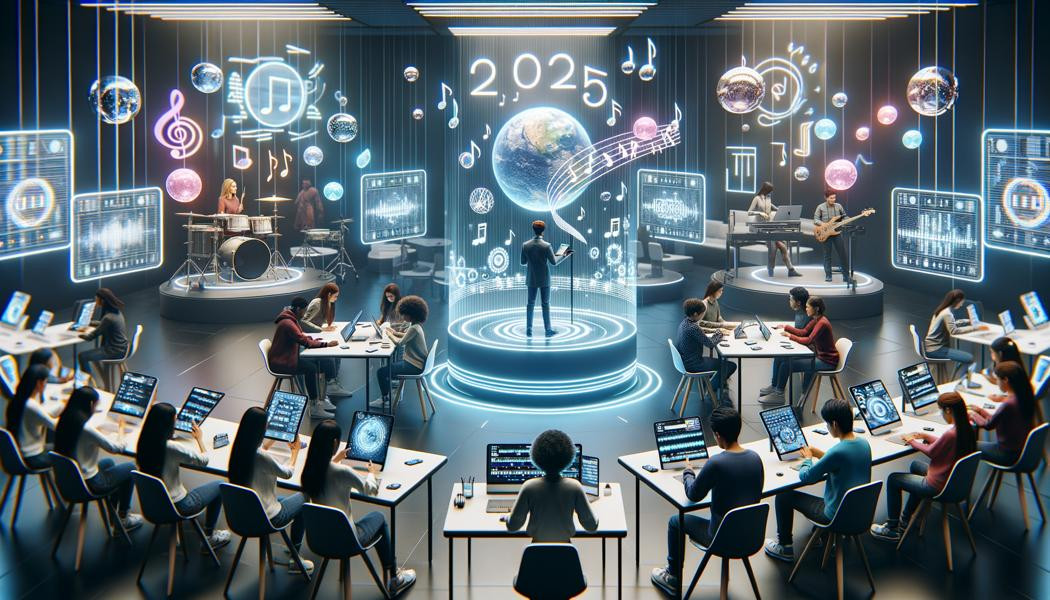
Music education is undergoing a profound transformation thanks to the rise of technology. In 2025, we will witness significant changes that will transform the way music is taught and learned. This article aims to explore the main technological trends that will influence music education, the essential tools for teachers and learners, as well as the positive impacts expected on student engagement and creativity. We will also discuss how these innovations, such as virtual reality and artificial intelligence, will shape the learning experience for aspiring musicians.
Do you need help mastering music education? Quickly find a qualified provider on Helplease and benefit from tailor-made service to meet all your needs. Discover professionals near you!Table of Contents
- What are the technological trends that will transform music education in 2025?
- How are mobile applications revolutionizing music learning?
- Which digital tools are essential for music teachers?
- How do augmented reality and virtual reality enhance the musical experience?
- What are the advantages of online learning for aspiring musicians?
- How can artificial intelligence personalize music education?
- Which streaming platforms are most beneficial for music students?
- What are the challenges of data security in digital music education?
- How does technology influence contemporary music composition?
- What are the best practices for integrating technology into music lessons?
- How do technological trends improve student engagement in music?
- What innovations can be expected in the field of music education after 2025?
What are the technological trends that will transform music education in 2025?
In 2025, music education will undergo significant developments driven by technological advancements. Digital tools, such as collaborative learning platforms, will become essential. These resources offer students access to a variety of educational materials, whether explanatory videos, digitized sheet music, or interactive exercises. In addition, these tools encourage group work, allowing learners to share their experiences and learn from one another, truly enriching the learning process.
Augmented reality (AR) and virtual reality (VR) will also grow in popularity. These immersive technologies will allow students to experience real concert or music composition situations without leaving their classroom. This immersion provides an entirely new level of engagement and understanding, making learning fun and captivating. Such applications do not simply simulate; they create learning environments where each student can interact with music in a more tangible way.
Artificial intelligence (AI) will play a key role in music education. Thanks to algorithms capable of analyzing student performance, teachers can better tailor their teaching to the individual needs of learners. Real-time feedback systems enable students to adjust their musical techniques instantly, thereby fostering their improvement. AI could also be used to compose evolving pieces, allowing students to adapt and learn at their own pace.
All in all, these technological trends will contribute to a learning ecosystem that fosters creativity, collaboration, and innovation, marking a revolution in music education.
The impacts of technology on access to music education
Technology has the potential to improve accessibility to music education. By making resources available online, learners from diverse backgrounds and situations can access music lessons that were previously out of reach. For instance, online platforms offer classes orchestrated by world-renowned musicians, enabling anyone, anywhere, to learn from professionals.
Greater personalization through data
The analysis of data collected on student performance will help identify trends and common challenges. Teachers can then personalize curricula and offer teaching approaches that meet each student's individual needs, thereby increasing motivation and engagement. This personalization is essential for maximizing learning outcomes and fostering a passion for music.
How are mobile applications revolutionizing music learning?
Mobile applications have fundamentally changed the way students learn music. With programs like Yousician or Simply Piano, users can receive interactive lessons on a variety of instruments and levels. These apps gamify learning, making practice more engaging and accessible. Users can progress at their own pace while being encouraged by instant feedback.
Furthermore, these applications often include social features, allowing students to connect with other musicians. This enables them to share progress, exchange tips, and motivate each other in their learning journey. These community elements are crucial for maintaining long-term engagement, creating a collaborative learning environment that goes beyond the walls of a traditional classroom.
Applications can also be used for music composition. Thanks to integrated music creation tools, students can experiment with melodies and harmonies, enabling them to create their own pieces. This develops their creativity and confidence in their musical abilities, while making the learning process more relevant and personal.
Finally, these tools are often perfectly suited to modern life, allowing students to learn at their convenience. Whether in transit, at a café, or at home, they can practice whenever it suits them, transforming every free moment into an opportunity for musical improvement.
Experience feedback thanks to evaluation platforms
Applications also provide evaluation platforms where students can test their skills. With exercises tailored to their level, users receive continuous assessments of their progress. This feedback system is essential to identify areas to work on and foster constant improvement.
A varied learning offer suitable for everyone
Mobile applications offer a wide range of musical styles to explore, from classical to jazz, as well as rock and pop. This diversity meets the varied tastes of students and gives them the opportunity to explore different genres, enriching their overall musical understanding and allowing them to discover aspects of themselves they might not otherwise have explored.
Which digital tools are essential for music teachers?
For music teachers, integrating digital tools has become essential to enhance teaching effectiveness. Among the most used tools are classroom management platforms, which allow teachers to track each student’s progress, distribute resources, and easily communicate with parents. These platforms streamline task organization and smooth communication, making educational processes more efficient.
Composition and audio recording software are also indispensable. Tools like GarageBand or Sibelius enable teachers not only to teach the fundamentals of music theory but also to encourage musical creation. This gives students the opportunity to create their own compositions, thereby stimulating their creativity and understanding of musical structures.
Videoconferencing and remote teaching tools have become crucial, particularly with the emergence of hybrid learning. Teachers can thus continue teaching regardless of the environment and maintain student engagement even remotely. This flexibility is vital in today’s context where learning may need to adapt quickly.
Finally, online educational resources, such as tutorials, MOOCs (massive open online courses), and explanatory videos, provide invaluable supplements to traditional lessons. They allow teachers to enhance their curriculum with varied and enriching teaching materials, making music education more dynamic and accessible.
Communication tools for student engagement
Digital tools also facilitate communication between teachers and students. Instant messaging applications or learning forums allow students to ask questions and get quick responses. This strengthens the teacher-student relationship and helps maintain engagement in the learning process, even outside of class hours.
Digital resource library
By providing a digital library of resources, teachers can encourage students to explore different aspects of music. Whether through articles, videos, or podcasts, this multidimensional approach helps students enrich their knowledge and develop a critical taste for music.
How do augmented reality and virtual reality enhance the musical experience?
Augmented reality (AR) and virtual reality (VR) offer immersive learning experiences that change how students interact with music. By integrating these technologies into music lessons, students can participate in simulated performance experiences that are musically stimulating. These simulated environments allow interactive ensemble playing, fostering a new group dynamic.
For example, music schools use virtual reality to let their students experience concerts in immersion, where they can be at the heart of the action, experiencing music from a completely new perspective. This approach helps students better understand the cultural and emotional context of the works they study.
Moreover, augmented reality can be used to overlay visual and informative elements on traditional learning materials. For instance, by pointing a tablet or smartphone at a score, students might see explanatory videos or practical tips to help them navigate complex pieces. This makes learning appealing and interactive.
The integration of AR and VR also helps reduce access barriers by allowing students to experience musical practice in a variety of environments, without the physical constraints of a traditional classroom. These tools make music learning more accessible and engaging for younger generations.
Stimulating creativity through immersive environments
By providing immersive spaces, VR and AR encourage student creativity. These technologies let them experiment with styles and genres without the usual limitations of instruments or equipment. They can thus compose, play, and collaborate in entirely virtual environments, freeing their imagination and encouraging a unique approach to music creation.
Interactivity and enhanced engagement
The immersive experiences offered by AR and VR also encourage stronger student engagement. The interactivity inherent in these technologies ensures that students are active in their learning, which improves information retention and strengthens motivation to explore music further. This makes AR and VR very innovative teaching tools that will continue to evolve in the coming years.
What are the advantages of online learning for aspiring musicians?
Online learning offers many advantages to beginner musicians. First, it provides exceptional flexibility. Students can access lessons and resources at their own pace, allowing for an optimal balance between their music learning and other commitments, whether academic or personal.
Furthermore, the variety of resources available online, such as videos, tutorials, and discussion forums, ensures that students can explore different styles and methodologies. This diverse access enriches their experience and allows them to choose the best approaches for themselves.
Online learning also encourages greater engagement. Through interactive platforms, users can track their progress, exchange instant feedback, and interact with other musicians. This dynamic not only fosters learning but also creates a sense of community among learners, which can be highly motivating.
Finally, the costs associated with online courses are often lower than those for in-person lessons. This opens up opportunities for students from various socio-economic backgrounds, making music education more accessible than ever.
Self-discipline and personalized learning methods
Online learning requires a certain level of self-discipline that can improve students’ organizational skills. By setting goals and planning their study sessions, aspiring musicians develop habits that will benefit them throughout their musical journey and beyond. Each student can also personalize their learning experience by choosing the modules that match their interests.
A limitless learning environment
Online platforms break down geographical barriers. Students can take lessons with teachers from all over the world, giving them access to expertise they might not have found locally. This enriches their musical perspective and broadens their understanding of music at a global level.
How can artificial intelligence personalize music education?
Artificial intelligence (AI) is revolutionizing music education by personalizing individualized learning. Through algorithms capable of analyzing students' learning data, teachers can tailor their teaching methods to each student's needs. For example, AI-powered apps can listen to a student play and provide immediate feedback on areas to improve.
Moreover, AI can be used to create personalized learning paths. By adjusting instructional content to the skill and learning pace of students, it ensures steady progress without frustration or boredom. Studies show that personalization speeds up the learning process and increases student engagement.
Artificial intelligence also enables the creation of recommendation systems that suggest pieces or exercises based on the user's skills and preferences. This not only stimulates students' curiosity but also allows them to discover a variety of genres and artists, thus enriching their musical culture.
Finally, AI also facilitates practice sessions by selecting pieces matching the student's level, creating more rewarding learning experiences. This technology is rapidly becoming an indispensable ally for tomorrow’s educators.
Performance analysis for targeted teaching
By integrating performance analysis tools, AI allows teachers to visualize student progress. This helps identify learning patterns and address specific weaknesses of each student. As a result, instruction becomes more targeted and effective.
Automatic generation of educational content
Artificial intelligence can also automate the creation of educational materials, such as practice exercises tuned to each student. This allows teachers to save time preparing lessons while focusing on more creative and interactive teaching methods.
Which streaming platforms are most beneficial for music students?
Music streaming platforms like Spotify, Apple Music, and YouTube play a central role in music learning. They allow students to instantly access a vast library of tracks, performances, and live concerts. This offers them the chance to listen to artists from the classics to contemporary musicians, thereby enriching their musical culture.
These platforms also offer playlist creation features and personalized recommendations that help users discover new genres and broaden their musical horizons. Students can stay up to date with current trends, showing the evolution of music and the impact of new technologies on musical styles.
Additionally, educational platforms such as Soundtrap and BandLab allow learners to collaborate on music projects online. These tools encourage teamwork and hands-on learning by providing an interface for creating and sharing compositions.
Interactivity and sharing are key elements of these services, making music learning collective and engaging. As a result, students do more than just learn independently; they also create networks with other musicians, which can enrich their learning experience.
Explore classics and contemporary trends
Thanks to the vast repertoires available on these streaming services, students have the opportunity to explore ancient musical traditions while staying connected to contemporary trends in the musical landscape. This allows them to better understand musical evolution and analyze different cultural contexts through music.
Participation in collaborative projects
Students can also use streaming platforms to initiate collaborative projects that enable them to create songs together. These hands-on experiences help develop teamwork skills and strengthen their listening and musical communication abilities.
What are the challenges of data security in digital music education?
In an increasingly connected world, data security is of paramount importance, particularly in the field of digital music education. Teachers and institutions must ensure the protection of students' personal information by implementing robust security mechanisms to protect data against breaches and cyberattacks.
It is essential to educate both teachers and students about best practices in cybersecurity. This includes using strong passwords, identifying suspicious messages, and protecting information shared online. Raising awareness of these issues increases trust in the digital tools used for music education.
At the same time, it is necessary for platforms used in music education to comply with privacy regulations such as the GDPR in Europe. These rules ensure that user data is handled ethically and securely.
Finally, integrating a culture of data security within educational institutions fosters a safer and more responsible learning environment. This helps maintain the trust of parents and students in digital music education initiatives.
Data protection tools
Schools can leverage security management tools that monitor and protect sensitive data. These solutions help detect potential threats and prevent incidents before they happen. In this way, they ensure the safe use of technologies in music learning.
Preparation for a secure digital future
By integrating training on data security into the curriculum, educators prepare their students to navigate safely in a digital world. Fully understanding the challenges allows students to become responsible digital citizens, aware of the consequences of their choices online.
How does technology influence contemporary music composition?
Technology has redefined how music is composed. Music production software, such as Ableton Live, Logic Pro, and FL Studio, provides composers with powerful tools to create, record, and mix tracks. These digital platforms offer incredibly rich sound libraries, enabling artists to experiment with varied genres and innovative sounds.
Furthermore, online collaboration tools make teamwork between musicians located far apart easier. Artists can share their ideas and tracks across borders, opening up a new field for creative exploration. This accessibility has led to fusions of styles and unexpected collaborations, greatly enriching the contemporary music scene.
Technology also allows composers to use AI algorithms to help generate melodic and rhythmic patterns. This computer-assisted composition process not only facilitates experimentation but also the emergence of new musical genres that may not have appeared without these tools.
In short, technology has truly broadened the horizons of composition, increasing creativity and innovation in the modern music landscape.
Music creation and accessibility
Access to online music creation tools has enabled more people to experiment and access music production. This has leveled the playing field, allowing artists from all backgrounds to be heard, regardless of financial resources. As a result, musical diversity has increased, with a multitude of influences reflecting different cultures and personal experiences.
Creative responses to contemporary challenges
Technology also offers creative responses to contemporary social challenges. For example, composers use storytelling techniques through music to address social and political themes. This results in powerful works that prompt reflection and action.
What are the best practices for integrating technology into music lessons?
The integration of technology into music education must be thoughtful and balanced to maximize its benefits. Among the best practices, it is recommended to start with clear learning objectives and to align technological tools with these objectives. This ensures that technology truly supports learning rather than distracting from it.
It is also crucial to encourage students to actively engage with technology. This could include using composition tools to create their own works or recording software to capture their performances. Interaction promotes a deeper understanding of concepts and techniques.
Furthermore, it is important to train teachers in the effective use of these technologies. Professional development sessions enable teachers to become familiar with the available tools and to discover how, when, and why they should be integrated into their teaching.
Finally, setting aside time for reflection and feedback is essential. Students should be encouraged to share their learning experiences with technology and express their feelings about these methods. This provides valuable insights that can refine and improve the teaching approach adopted by the instructor.
Create an interactive classroom environment
By integrating interactive screens and collaborative tools, teachers can create a dynamic learning environment where technology is used to stimulate interest and student engagement. Hands-on group activities, where technology is used to collaborate on music projects, can lead to enriching interactions.
Encourage individualized learning
Thanks to technology, teachers can personalize learning paths according to students' skills and interests. Providing resources suited to various ability levels creates a more rewarding learning experience. Students should feel supported in their progression, which is made possible by an individualized approach through technology.
How do technological trends improve student engagement in music?
Technological trends, especially in the areas of gamification and interaction, greatly improve student engagement. Educational games dedicated to music interest students in a proactive way. These activities make learning fun and effective, as students achieve tangible results while enjoying themselves.
Furthermore, music sharing and creation platforms encourage a form of community where students can express their preferences and encourage their peers. This stimulates cultural exchange that nurtures their passion for music. Community participation in music projects significantly contributes to their sense of belonging and involvement in learning.
Additionally, the integration of digital resources allows students to experience music in real time, whether through mixing tools or collaborative composition platforms. Students can see results instantly, which provides them with immediate feedback on their progress and enables them to adjust in real time.
This also contributes to a more inclusive learning environment, where everyone can participate actively. The use of technology makes music education accessible to learners from all backgrounds, promoting a diversity of expressions and interpretations that enrich the collective experience.
Impacts of technology on student motivation
Digital tools enable students to see their progress and achievements. By using apps that track their musical learning, they can understand where they stand, which increases their motivation to improve their skills. This individualized tracking fosters a sense of accomplishment—a key factor in maintaining engagement.
Creativity and personal expression
Technology gives students a way to express their musical individuality. Through online creation platforms, they can experiment with sounds, arrangements, and effects, thus developing their creativity. This leads to a better understanding of themselves and others, shaping a space for experimentation where ideas can flourish.
What innovations can be expected in the field of music education after 2025?
The future of music education after 2025 looks promising. Advances in AI technology are expected to continue transforming personalized learning, with increasingly sophisticated programs able to adapt to each learner's unique needs.
Likewise, the emergence of mixed reality—which combines AR and VR to create even more immersive experiences—will likely become an integral part of music learning, allowing students to interact with environments and musical works in innovative ways. This could transform how concerts, lessons, and even exams are experienced.
We can also expect further innovations in remote collaboration. By enabling students from different parts of the world to collaborate on music projects in real time, technology will transform group dynamics and open up unexplored multicultural learning opportunities.
Finally, the integration of digital ethics and cultural sensitivity into curricula may intensify, guiding students to navigate learning spaces that are respectful and inclusive. This will create a richer and more engaging musical culture, where diversity is valued and celebrated.
Perspectives on global music education
Music education is acquiring a global dimension thanks to technology. Transnational collaborative learning initiatives will pave the way for cultural exchange and unexpected musical innovations. Students will have the chance to explore styles from around the world, thereby enriching their understanding and appreciation of music as a universal language.
Collaboration with professionals from the music industry
Finally, the growing connection between educational institutions and the music industry will give students access to opportunities for internships, mentoring, and employment. This will give rise to a learning ecosystem that connects theory and practice, making music education even more relevant in the modern world.
Conclusion
In summary, music education stands on the threshold of a revolutionary transformation thanks to the integration of emerging technologies. Personalized learning methods, interactive tools, and digital resources enrich the student experience and encourage their engagement. The innovations on the horizon promise to redefine our perceptions and practices of music, making music education an even more exciting and transformative adventure.
Whether you need quick help or wish to offer your services, Helplease is your solution! Download the app to access qualified experts or find clients with a single click, and simplify your daily life! Available on iOS and Android!