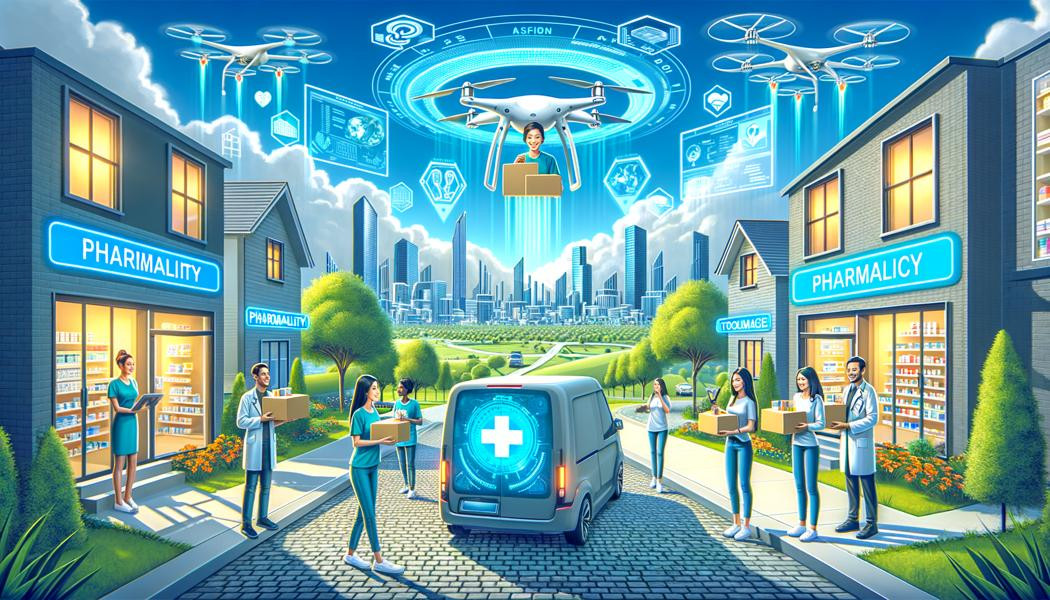
In a constantly evolving world, medication delivery is at the heart of concerns for healthcare professionals and patients alike. The year 2025 promises to be a major turning point for this sector, marked by technological innovations aimed at improving the safety and efficiency of delivery services. This article will review the main upcoming innovations in the field of medication delivery, the benefits of these innovations for patients, as well as the challenges they present for industry players. By focusing on practical solutions and emerging technologies, we will highlight what the future holds for ensuring a reliable and safe medication delivery service.
Need help with medication delivery? Find a qualified provider quickly with Helplease and benefit from a customized service tailored to all your needs. Discover professionals near you!Summary
- What are the key innovations that will transform medication delivery in 2025?
- How does technology improve the traceability of medications during delivery?
- What are the advantages of home medication delivery for patients?
- What safety measures are implemented to guarantee the security of medication deliveries?
- How could drones revolutionize the delivery of medications in remote areas?
- What are the regulatory challenges facing new medication delivery methods?
- How can data confidentiality of patients be ensured during medication delivery?
- What is the importance of the cold chain in the delivery of sensitive medications?
- What roles do online pharmacies play in innovating medication delivery?
- How can patient feedback improve delivery services?
- What consumer trends are influencing medication delivery in 2025?
- How are partnerships between technology and pharmaceutical companies shaping the future of medication delivery?
What are the key innovations that will transform medication delivery in 2025?
Innovations in the field of medication delivery are numerous and varied. In 2025, several emerging technologies, such as artificial intelligence and the Internet of Things (IoT), are expected to radically transform delivery methods. These innovations enable more efficient inventory management, reduce errors, and improve traceability of products. For example, AI-based supply chain management systems can forecast demand and optimize delivery routes, ensuring increased availability of medications.
In addition, the use of autonomous robots and drones for medication delivery is expanding rapidly. In both urban and rural areas, these technologies reduce transit times and enable access to geographically isolated locations. For instance, companies are already experimenting with drones to deliver pharmaceutical products in less time, which can be crucial in emergencies or for patients with limited mobility.
The digitalization of ordering and delivery processes also facilitates interaction between patients and pharmacies. Mobile applications and online platforms allow patients to order their medications and track their delivery in real time. This not only enhances customer experience but also increases transparency and user satisfaction.
Finally, with the rise of safety technologies, medication delivery methods will also be more secure. For example, integrating smart lock systems ensures that only authorized recipients can access delivered medications. These safety measures increase patients' confidence in delivery services.
Professionals, looking for more clients? Register on Helplease today to offer your services and grow your business. Access a large customer base in just a few clicks!How does technology improve the traceability of medications during delivery?
Traceability is essential during medication delivery, and new technologies play a crucial role in this field. Thanks to barcodes and RFID technologies (radio-frequency identification), every step of a medication’s journey can now be tracked, from manufacturing to final delivery. This ensures that medications are authentic and that their transport conditions meet established standards.
Additionally, integrating advanced IT systems enables better data management. Every movement of a medication is recorded, and alerts can be generated in case of anomalies, such as a break in the cold chain. This real-time monitoring helps avoid losses and ensure the quality of delivered products.
Blockchain technology is also emerging as a promising tool for traceability. By storing information in a decentralized, immutable way, it strengthens transparency and trust within the pharmaceutical delivery system. Every supply chain player can verify a product's authenticity, reducing the risk of counterfeit medications.
Finally, digital platforms allow patients to track their orders in real time. By accessing precise information about delivery status and the origin of their medications, patients can have peace of mind, knowing they are receiving safe, high-quality products.
If you're looking for an expert to meet your specific needs, visit Helplease and discover available providers near you. Simplify your life and find the right professional!What are the advantages of home medication delivery for patients?
Home medication delivery offers many advantages for patients. First, it provides easier access to medications, especially for those who have difficulty traveling, such as the elderly or people with chronic illnesses. By avoiding potentially complicated trips to a pharmacy, patients can receive their treatments directly at home.
Furthermore, discretion is often a key factor. Many patients prefer to receive their medications at home to avoid being seen purchasing certain sensitive treatments. Home delivery allows them to maintain their privacy while ensuring rigorous health management.
Reduced stress is another significant advantage. By avoiding pharmacy queues and being able to track their orders in real time, patients can manage their health more calmly. This positively impacts their overall well-being, as they feel supported and cared for.
Finally, home delivery can help ensure better medication adherence. When a patient receives their medications directly at home, they are less likely to forget to take them. Indeed, it creates a more effective routine for health monitoring, which is essential for chronic conditions requiring regular follow-up.
What safety measures are implemented to guarantee the security of medication deliveries?
The safety of medication deliveries is paramount, and several measures are put in place to guarantee the security of products. First, identity verification systems are integrated into delivery processes to ensure that only authorized individuals receive the medications. This includes electronic signatures or access codes, further protecting personal information.
Secondly, transport conditions are rigorously observed. Temperature and humidity sensors can be used to monitor the delivery conditions of sensitive medications in real time. In case of a cold chain break, instant alerts can be sent, enabling quick corrective action.
Specially designed packaging for medication safety also plays a key role. They are often sealed to detect any unauthorized tampering, thus guaranteeing product integrity until their final destination. These packages may contain anti-counterfeiting devices to ensure delivered medications are authentic.
Finally, traceability is a vital element of safety measures. Thanks to digital technologies, every stage of delivery is recorded, creating a transparent audit trail that increases patients’ and health professionals’ trust in the medication delivery system.
How could drones revolutionize the delivery of medications in remote areas?
Drones are on the verge of radically transforming medication delivery, especially in remote areas where access to healthcare is limited. With their ability to fly over difficult terrain, drones can transport medications where traditional carriers cannot reach, playing a crucial role in healthcare access in isolated regions.
Additionally, drones can provide rapid deliveries, which is particularly important in medical emergencies. For instance, when vital medications are needed urgently, drones can drastically reduce response times, thus saving lives.
The use of drones for medication delivery also helps reduce operational costs. Eliminating the need for ground vehicles and their maintenance, resulting savings can be reinvested in other healthcare services. Furthermore, drones can be deployed more quickly than traditional transport methods, thus increasing delivery operation efficiency.
However, using drones presents challenges. Regulatory concerns regarding air safety and privacy need to be addressed, as well as ensuring that these technologies are accessible and affordable for the relevant healthcare systems. Despite these challenges, the future of medication delivery by drones looks promising.
What regulatory challenges are facing new medication delivery methods?
New medication delivery methods, such as those using drones or autonomous robots, face various regulatory challenges. One of the main issues is setting safety standards to ensure these delivery methods do not compromise public health. Regulatory bodies must develop clear guidelines to ensure the safe operation of these technologies.
Furthermore, patients’ data confidentiality is a major concern. With the increase in using digital systems for tracking deliveries, it is essential to ensure that patients' personal information is not compromised. Regulations must therefore ensure effective safeguards are in place to protect sensitive data.
Interoperability challenges between different healthcare and delivery systems also pose an obstacle. For new methods to be effective, they must integrate smoothly with existing infrastructures. This requires collaboration between technologists, healthcare providers, and public authorities to design compatible information systems.
Furthermore, companies must also meet the challenge of funding and access to technologies. To enable widespread adoption, necessary investments are needed to ensure even low-resource healthcare facilities can benefit from the innovations these new delivery methods offer.
How can data confidentiality of patients be ensured during the medication delivery process?
Ensuring data confidentiality of patients is essential as part of medication delivery. The use of digital tools for monitoring and managing deliveries poses challenges, but also offers opportunities to enhance data security. By integrating encryption protocols for data storage and transfer, companies can guarantee patient information remains confidential.
Moreover, it is crucial to limit access to sensitive information only to those who need it for task execution. By adopting strong authentication systems, delivery companies can ensure only authorized employees can access patient data. This significantly reduces the risk of data breaches and misuse.
Implementing data protection awareness training for staff involved in medication delivery is also a key measure. Such training should address confidentiality risks and instruct employees in best practices for handling sensitive information.
Finally, transparency with patients about the use of their data is essential. Informing patients about how their information is collected, used, and protected helps strengthen trust between healthcare providers and patients.
What is the importance of the cold chain in the delivery of sensitive medications?
The cold chain is essential for the delivery of sensitive medications, such as vaccines and certain biological treatments. These medications require strict temperature conditions to maintain their efficacy, and any break in the cold chain can compromise their safety and effectiveness.
To guarantee the cold chain, using advanced technologies such as temperature sensors and real-time monitoring systems has become common. These technologies enable continuous tracking of medication temperatures during transport, thus ensuring they remain within the required temperature range.
Staff training on proper handling and storage procedures is also crucial. Ensuring that employees are aware of the importance of maintaining the cold chain minimizes the risk of mistakes that could compromise product integrity.
Finally, regular audits of delivery and storage practices should be conducted to identify areas for improvement and ensure the highest standards are maintained throughout the supply chain.
What roles do online pharmacies play in innovating medication delivery?
Online pharmacies play a crucial role in innovating medication delivery. By making it easier to order medications through digital platforms, they offer patients easier and more convenient access to treatments. This is especially beneficial for those living in rural areas or with mobility issues.
Moreover, online pharmacies are often at the forefront of integrating traceability and safety technologies. They use advanced digital systems to ensure delivered medications are authentic and of high quality. This helps strengthen consumer confidence in these services.
In addition, online pharmacies leverage data to improve the services offered. For instance, they may provide personalized recommendations based on previous prescriptions or patients’ preferences, which enhances the user experience and can lead to better treatment adherence.
Finally, by developing partnerships with delivery companies, online pharmacies also innovate in logistics. These partnerships allow them to optimize their delivery operations, expand their network, and reach a wider audience, thereby further integrating healthcare services into the digital economy.
How can patient feedback improve delivery services?
Patient feedback is a valuable tool for improving medication delivery services. By collecting and analyzing this feedback, companies can identify weak points in their operations and make necessary adjustments to better meet users' expectations.
For example, satisfaction surveys can be used to understand what works well and what needs improvement in the delivery process, whether it be speed, quality of interaction with staff, or delivery tracking. This constructive feedback can lead to tangible improvements that build trust and loyalty among customers.
Additionally, establishing open communication channels, such as helplines or online forums, allows patients to express their concerns and suggestions directly. This helps build a dialogue between patients and service providers, fostering a patient-centered approach.
Finally, feedback can also serve as a basis for case studies that illustrate the impact of implemented improvements. This may inspire other companies to adopt similar practices and invest in innovation within their own delivery services.
What consumer trends are influencing medication delivery in 2025?
Consumer trends influencing medication delivery in 2025 are shaped by the evolution of patient expectations and behaviors. Consumers increasingly demand convenient and personalized services, wanting easy access to their medications without constraints. This trend is driving the development of innovative delivery solutions that meet these expectations.
The digitalization of healthcare services is also a key factor. Consumers expect to interact with delivery services via digital platforms, leading to increased use of mobile applications for ordering and tracking products. This requirement facilitates a better understanding of consumer needs and can lead to smoother experiences.
Moreover, the growing focus on health and wellness is influencing consumer choices. Customers are increasingly seeking natural and sustainable health products. As a result, delivery services must adapt by offering solutions that match these preferences, such as biologically sourced medications or eco-friendly health products.
Finally, the importance of the user experience is a determining factor. Consumers are not only looking to receive their medications but also to enjoy a pleasant service. Companies that invest in user-friendly platforms and high-quality customer service will be those that succeed in securing customer loyalty.
How are partnerships between technology and pharmaceutical companies shaping the future of medication delivery?
Partnerships between technology and pharmaceutical companies are becoming increasingly common and play an essential role in the evolution of medication delivery. By collaborating, these two sectors can combine their expertise to create innovative solutions that improve delivery operations efficiency.
For example, technology start-ups are developing digital platforms integrating inventory management, traceability, and real-time delivery. By partnering with pharmaceutical companies, they can ensure their solutions meet the sector’s specific requirements while complying with regulations.
Furthermore, these partnerships accelerate innovation. By combining the technical knowledge of technology companies with pharmaceutical expertise in health products, more tailored solutions to patient needs can be quickly developed. The aim is to create personalized services that better meet consumer expectations.
Finally, data sharing between these sectors provides a better understanding of trends and market needs. By analyzing data on medication consumption and delivery behaviors, companies can anticipate future changes and adapt their services accordingly, thus proactively shaping the future of medication delivery.
Conclusion
In summary, medication delivery is undergoing major transformation, with the emergence of numerous innovations designed to enhance the patient experience and guarantee service safety. Technologies such as artificial intelligence, drones, and blockchain play a central role in this evolution. Regulatory challenges, data confidentiality, and the cold chain remain major concerns. However, with the rise of online pharmacies and partnerships between technology and pharmaceutical companies, the future of medication delivery looks promising. Best practices and a focus on user experience will enable the sector to progress toward an era where safety and accessibility are maximized for all patients.
Whether you need quick help or want to offer your services, Helplease is your solution! Download the app to connect with qualified experts or find clients with a single click, and simplify your daily life! Available on iOS and Android!