

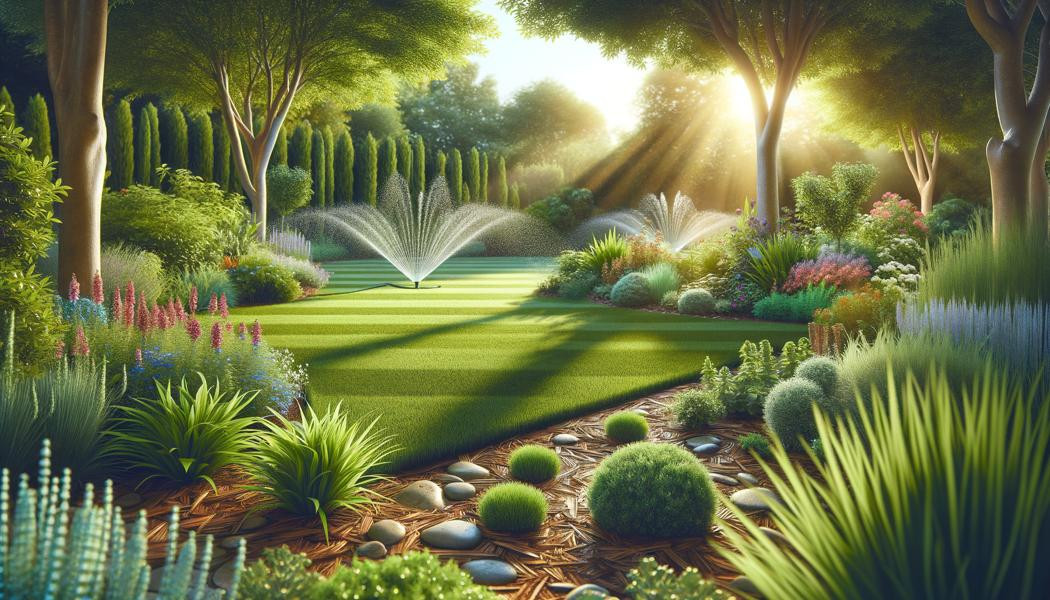
In a world increasingly affected by climate change, maintaining your lawn has become a crucial issue, not only for aesthetics but also for the preservation of water resources. In 2025, saving water to maintain your lawn is more than a necessity; it is a responsibility. This article focuses on practical tips that help reduce water consumption while keeping a lush lawn. We will discuss efficient watering techniques, choosing grass types suited to dry conditions, as well as methods to improve soil water retention. Other topics include the importance of mowing practices, mulching solutions, and modern irrigation systems.
Need help maintaining your lawn? Quickly find a qualified service provider on Helplease and benefit from a tailor-made service to meet all your needs. Discover professionals near you!Saving water for lawn care is vital for several reasons. First, water is a precious resource that is becoming increasingly scarce in many regions. In 2025, with growing droughts, it is essential to rethink our watering methods to preserve this resource. This not only helps reduce your water bill but also contributes to environmental protection.
Furthermore, optimal water use can promote lawn health. Overwatering can lead to fungal and plant diseases. Therefore, balancing your lawn’s water needs ensures healthy growth and resilience against climate vagaries. By adopting water-saving practices, we can guarantee a green lawn without compromising water resources.
Finally, saving water also encourages a more sustainable approach towards garden and green space management. By integrating environmentally friendly maintenance techniques, every gardener can play an active role in preserving biodiversity and the living environment. In this sense, saving water becomes a long-term added value.
In short, understanding the importance of these practices is fundamental for anyone who wants to maintain a lawn responsibly and respectfully toward our environment.
Water management is a major challenge in the fight against climate change. As climate conditions worsen, droughts are becoming more frequent, making water supply increasingly precarious. By saving water in our gardens, we help reduce pressure on local water resources. This helps preserve water reserves for the essential needs of the community and supports the health of surrounding ecosystems.
Reducing water consumption also helps ease economic burdens. Every drop of water saved results in lower bills, allowing you to redirect those funds for other needs. Moreover, initiatives such as subsidies for water-efficient irrigation systems can also lighten the financial load for property owners.
To reduce water consumption when watering your lawn, several techniques can be adopted. Using a watering can, for instance, might seem basic, but it’s an effective method that allows you to precisely control how much water you dispense. By targeting the driest areas, you avoid overwatering areas already well hydrated.
Another useful technique is deep but less frequent watering. Light and frequent watering can result in shallow root growth, while less regular but deeper watering encourages stronger root development. This also helps your lawn become more drought-resistant. For this, watering deeply for an hour once a week is often recommended.
Using watering nozzles that shut off automatically can also help avoid water waste. Additionally, it’s recommended to schedule watering early in the morning or late at night to prevent excessive evaporation. By avoiding the hottest hours of the day, you maximize the efficiency of each watering session.
Finally, drip irrigation can be particularly valuable for sustainable water management. By allowing water to infiltrate directly into the soil, this method doesn’t waste water through evaporation or runoff and ensures targeted hydration.
Mulching is another effective approach that reduces water evaporation from the soil. By covering the ground with wood chips or other organic matter, water is better retained in the soil, decreasing the need for frequent irrigation.
Lastly, consider investing in smart irrigation systems adapted to weather conditions. These systems use sensors to adjust watering according to your lawn's exact needs, thus avoiding unnecessary watering and optimizing water use.
Assessing your lawn's water needs is essential for optimizing its health while saving this precious resource. To do so, it is vital to analyze several factors: soil type, grass type, and your local climate. In general, a lawn needs about 25 to 30 mm of water per week, but this depends on specific conditions.
A good indicator for determining if your lawn needs water is to monitor the color of the grass blades. If the color starts turning yellow or the blades bend under pressure, this indicates a need for watering. Furthermore, soaking one square meter of your lawn and observing infiltration can indicate your soil’s water retention ability, which is crucial to adjust your watering schedule.
Besides visual checks, tools such as soil moisture meters can provide accurate data on soil moisture at different depths. These devices allow you to optimize watering and plan for your lawn's water requirements.
Weather conditions also influence your lawn's water needs. For example, a period of intense heat or drought increases water demand, while significant rainfall can reduce or eliminate the need for additional watering. Therefore, it is advisable to follow weather forecasts and adjust your watering accordingly.
An irrigation timer can also be an excellent investment to facilitate adjusting your lawn’s water needs. These automatic devices adjust according to weather forecasts, so you don’t water when rain is expected. Moreover, this helps prevent watering during times of high evaporation.
Choosing the right type of grass is crucial for dry regions. Choosing suited varieties can also significantly reduce water consumption. For example, fescue-type grass and bermudagrass are known for their drought tolerance and ability to thrive with less moisture.
Grasses like ryegrass can provide a beautiful green color but require more water. By contrast, zoysia, although somewhat slower to establish, is well-known for its heat and drought resistance and is also self-sustaining with less water use.
Another option is tall fescue, which requires less water than other varieties. It is particularly suited for more temperate climates and offers excellent drought resistance. Investing in seed mixes that combine several resistant varieties can also be an excellent way to increase your lawn’s durability.
Lastly, keep in mind that timing of planting plays a crucial role. Sowing during cooler periods helps to establish good rooting before summer heat, reducing water needs for young seedlings.
Assessing your lawn for grass varieties adapted to your region can involve analyzing drought tolerance. These analyses help you understand which species will best withstand dry conditions and will be most economical in terms of water use.
It is recommended to opt for high-quality seeds rated for drought tolerance to ensure their resilience during dry periods. Even though the initial cost might be higher, investing in better quality seeds can result in significant water and maintenance savings over time.
Improving water retention in your soil is essential for reducing water consumption in your lawn maintenance. One of the best practices is enriching the soil with organic matter such as compost. By adding compost, you improve soil structure, promote better aeration while increasing its ability to retain moisture.
Another strategy is implementing cover cropping techniques, such as sowing clover or other plants that keep the soil covered. This limits evaporation and helps maintain proper moisture levels even during dry periods.
Using mulch can also be beneficial. Organic mulches like bark or yard waste act as a physical barrier that reduces evaporation and maintains an optimal environment for roots. This contributes to more hydrated soil and a healthier lawn.
Lastly, managing irrigation using adapted techniques, such as deep watering, allows water to reach the roots more effectively and promotes better long-term water retention.
To optimize water retention, it is essential to carry out a soil analysis to determine its composition. This will help you understand what amendments may be needed to improve your soil structure.
Another practice to consider is landscaping around your lawn. By integrating elements such as water retention beds, you enable water to infiltrate rather than run off, which improves your soil’s ability to retain moisture.
Adding organic matter to the soil can have a significant impact on its moisture retention capacity. By incorporating organic amendments, such as compost or natural fertilizers, you improve soil structure to retain water better while enriching it with nutrients.
Biochar-based products, for example, are known for their water absorption abilities. Biochar can both increase the soil’s water retention capacity and promote proper air circulation, which is essential for root health.
Moreover, home composting areas can provide a constant supply of organic matter throughout the year. You can incorporate food scraps and garden waste to produce a rich compost that will benefit your lawn.
Natural fertilization also helps to improve soil biological activity, making it more capable of retaining moisture over time. Natural fertilizers, such as well-rotted manure or seaweed-based products, can help stimulate the biodiversity responsible for soil balance.
Living soil systems also encourage water retention. By fostering sufficient biodiversity and avoiding chemicals, you maintain soil health that supports water absorption capacity. This results in a more sustainable garden and a better-hydrated lawn.
Mowing does not just serve aesthetics. Proper mowing shapes lawn health and its water needs. By cutting the grass to an adequate height, you encourage deeper and stronger rooting. Deeper roots can seek out moisture more effectively, thus reducing the need for watering.
Additionally, mowing the lawn with a higher mower blade setting preserves more moisture in the soil. This reduces the direct exposure of roots to the sun and limits evaporation. A cutting height of 7 to 10 centimeters is often recommended to optimize water needs.
It is also important not to mow too short, as this can stress the lawn and increase its water consumption during hot periods. By taking proper care of your lawn, you ensure not only a beautiful appearance but also optimized water use.
Regular mowing helps to encourage uniform growth and also encourages the self-replication of the grass. This stimulates the root system while minimizing the spread of unwanted plants that can compete for water.
Mulching mowers, which cut the grass into small pieces and leave them in place, also offer numerous benefits. By nourishing the soil and naturally improving soil quality, they promote overall lawn health and reduce the need for frequent watering.
Mulching is an effective technique for retaining soil moisture while offering additional benefits. Using organic mulches such as wood chips or straw can play a vital role in reducing water evaporation and regulating soil temperature.
Mulch also inhibits weed growth, limiting competition for water. By reducing water expenses, mulches thus allow for more efficient use of the resources available for your lawn.
In addition to these organic mulches, inorganic materials such as stones or clay balls can also be used. These do not decompose and ensure prolonged moisture management by regulating soil humidity over a longer period.
Each type of mulch has unique characteristics. For instance, straw-based mulches offer rapid decomposition and nutrient input, while mineral mulches last longer. Your choice should depend on your lawn’s specific needs and your climate.
For maximum effectiveness, it is important to apply mulch at an adequate thickness, generally between 5 and 10 cm. This optimizes temperature and moisture regulation in the soil.
Automated irrigation systems can be an ideal solution for reducing water consumption while ensuring effective lawn maintenance. When correctly programmed, these systems adapt to your lawn’s needs and reduce water waste.
These systems are often equipped with moisture sensors that assess soil conditions and adjust watering to the actual needs. This prevents overwatering and keeps your lawn receiving exactly the right amount of water without excess.
Smart watering timers also incorporate weather data to adjust the irrigation schedule, saving you time and water. Likewise, well-chosen nozzle placements ensure that water is more efficiently distributed, targeting the areas that need it.
Investing in an automated irrigation system may seem costly at first, but the water savings achieved over the long term can offset these initial costs. In the end, you not only support a healthier lawn, but also contribute to the preservation of precious water resources.
There are different types of automated irrigation systems, ranging from sprinkler systems to drip irrigation. The ideal type will depend on the size of your garden, your soil type, and your grass variety.
There are many mistakes gardeners can make when maintaining their lawns during drought. One of the most common is overwatering. This not only wastes water, but can also harm your lawn by promoting the growth of fungal diseases.
Another common mistake is mowing the lawn too short, which can stress the plants and reduce their ability to withstand dry conditions. Instead, maintaining an appropriate cutting height encourages rooting and protects the roots from high temperatures.
It is also unwise to plant grass species that are not suited to the local climate. Always look for varieties that thrive in your region to maximize the effectiveness of your care and drought resistance.
Another mistake is neglecting to fertilize your lawn before dry periods. Fertilizing helps strengthen overall plant health. Use natural fertilizers to boost vigor, which will help them better withstand challenging conditions.
Finally, not regularly monitoring your lawn for signs of water stress can have disastrous consequences. It is crucial to closely observe how your lawn reacts to drought conditions in order to adjust your watering practices accordingly.
Preparing your lawn before the arrival of summer can have a significant impact on water consumption. Start with proper spring fertilization, by adding compost or organic fertilizers. This will encourage strong root development, making the lawn better able to seek out moisture in the soil.
Next, adopt scarification techniques to aerate the soil, which will improve water absorption. This provides direct access to moisture while promoting better air circulation. Scarifying at the end of spring is often recommended before the intense summer heat arrives.
Additionally, apply mulch around your lawn to reduce water evaporation. A layer of organic mulch helps maintain suitable temperatures and retain moisture, which is vital in the summer.
Performing regular inspections before summer also allows you to spot potential problems. This will let you act early, whether by correcting nutrient deficiencies or treating diseases before they worsen.
Develop a revised maintenance plan by emphasizing the use of watering techniques and natural products as summer heat approaches. Adjust your watering schedule to maximize efficiency on the hottest days.
Tracking the impact of your water saving efforts can help improve your maintenance efficiency. Start by noting how much water you use before and after making changes to your watering practices. You can install a water meter to precisely measure your consumption.
Another method is to regularly assess your lawn. Observe and note changes in the color, density, and vigor of the grass according to your water-saving efforts. This can give you a clear idea of how effective your approaches are.
It is also possible to create a maintenance journal, where you can record your watering habits, the weather, and changes observed in the lawn. This allows you to adjust your strategies if needed, based on your results.
Using smart irrigation systems can also make it easier to track your water consumption. These systems are often equipped with analysis features that show you how much water you are saving over time. This lets you make informed decisions to make your maintenance even more effective.
In conclusion, lawn care that saves water has become essential in 2025. By applying specific techniques, choosing suitable types of grass, and integrating environmentally friendly maintenance practices, it is possible to have a green lawn while supporting the preservation of water resources. Regularly assessing needs, monitoring your impact, and adjusting your methods are key steps to achieve this goal. Together, let's make our gardens sustainable and resource-efficient.
Whether you need quick help or want to offer your services, Helplease is your solution! Download the app to access qualified experts or find clients in a single click, and simplify your daily life! Available on iOS and Android!