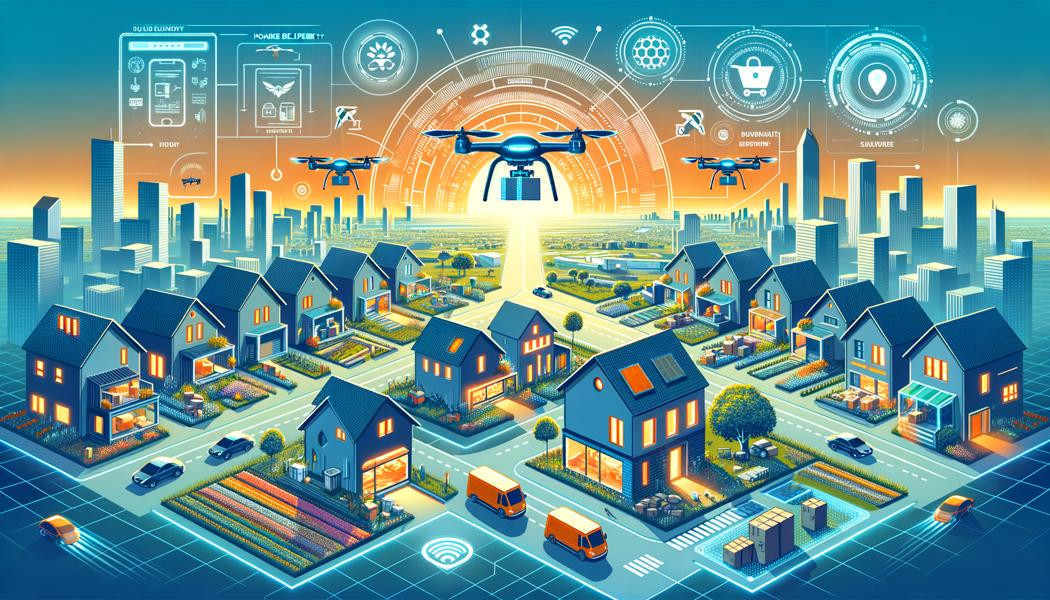
In a constantly evolving world, home delivery is continually reinventing itself. In 2025, promised technological innovations are radically transforming the way products are transported and delivered directly to consumers' doors. This article explores the emerging trends and the key technologies shaping the future of home delivery. We will examine how drones, autonomous vehicles, and artificial intelligence are revolutionizing delivery services, while growing concerns about sustainability and regulation are redefining the logistics landscape. Additionally, we will analyze the evolution of consumer expectations and the challenges companies must face to adapt to these changes.
Do you need help with home delivery? Quickly find a qualified provider on Helplease and benefit from a tailor-made service to meet all your needs. Discover professionals near you!Summary
- What are the technological innovations in home delivery for 2025?
- How will drones transform home delivery?
- What impact will autonomous vehicles have on the home delivery sector?
- What are the trends in sustainable and eco-responsible delivery?
- How does artificial intelligence improve the efficiency of home deliveries?
- What challenges need to be overcome to optimize home delivery in 2025?
- How are consumer expectations evolving regarding home delivery?
- What emerging logistics solutions improve delivery speed?
- How can blockchain be used to secure deliveries?
- What roles do delivery platforms play in sector innovation?
- What regulations could influence the home delivery sector in 2025?
- How are companies adapting to new customer delivery requirements?
What are the technological innovations in home delivery for 2025?
Technological innovations shaping home delivery for 2025 include advanced management systems, warehouse automation, and increased use of artificial intelligence to optimize delivery routes. These technologies not only improve efficiency but also help reduce operational costs for logistics companies.
Digital platforms also play a key role in modernizing ordering processes. Customers can track the location of their parcels in real time, which enhances transparency and trust. Moreover, omnichannel solutions enable companies to cater to multiple ordering channels, whether online or in physical stores.
It's also important to mention the rise of electric vehicles in delivery fleets, thereby reducing the carbon footprint of these services. These innovations address two major needs: satisfying consumers' demand for speed and meeting growing regulatory requirements regarding the environment.
Automation technologies
The integration of automation tools in warehouses accelerates the order picking process. Robots can now handle storage and order preparation, increasing fulfillment speed, particularly during peak periods.
Real-time tracking platforms
The ability to track the entire delivery process in real time has improved the customer experience. Users can receive instant notifications on the status of their orders, reducing wait anxiety and improving overall satisfaction.
Professionals, looking for more clients? Register on Helplease today to offer your services and grow your business. Access a large customer base in just a few clicks!How will drones transform home delivery?
Drones represent one of the most promising advances in the field of home delivery. Their ability to make deliveries quickly and autonomously opens new horizons for the sector. In 2025, drones are expected to become a commonplace delivery tool, especially in densely populated urban areas where traffic can cause delays.
These devices enable the delivery of packages to hard-to-reach or remote destinations while reducing transport times. Tencent and Amazon have already begun experimenting with drone parcel delivery, which could revolutionize the traditional delivery model.
By integrating advanced mapping and autopilot technologies, drones are able to navigate in real time while complying with airspace regulations. Data collection—such as weather conditions and air traffic—is essential to ensure safe and efficient delivery.
Reduction in delivery times
Drones have the potential to significantly cut waiting times for home deliveries. In certain regions, deliveries that previously took several hours could be accomplished in just a few minutes. This can be especially advantageous for urgent orders or perishable goods.
Regulatory challenges
However, the use of drones for home delivery does not come without challenges. Regulations concerning airspace as well as concerns related to safety and privacy are major obstacles that must be overcome before these technologies can be widely adopted.
What impact will autonomous vehicles have on the home delivery sector?
Autonomous vehicles are set to transform the landscape of home delivery. These vehicles, capable of operating without human intervention, promise increased efficiency and safety. Operating 24/7, they can deliver at an unprecedented pace.
Operational costs for autonomous vehicles are also expected to decrease, which could lead to lower delivery fees for consumers. Furthermore, by removing the need for a driver, logistics companies could maximize their profit margins.
As a result, "just-in-time" delivery models—where products are delivered almost instantly after ordering—will likely become standard. The speed of deliveries could even become a decisive factor in competition between sector companies.
Impact on employment
Although autonomous vehicles could bring considerable benefits, their adoption could also raise concerns about employment within the delivery industry. Replacing drivers with autonomous vehicles could lead to a significant reduction in jobs, calling for upskilling initiatives for affected workers.
Infrastructure and safety
The integration of these vehicles also requires adjustments in road infrastructure and safety. Companies will have to work closely with local authorities to develop roads suitable for autonomous vehicles, while ensuring the safety of other road users.
What are the trends in sustainable and eco-responsible delivery?
Sustainability is becoming a major concern in the home delivery sector as consumer awareness regarding environmental issues increases. Companies are adopting greener practices, notably incorporating electric vehicles and optimizing their supply chains.
Initiatives to reduce the carbon footprint also extend to packaging choices. The use of recyclable and compostable materials is becoming essential, helping to reduce waste generated by deliveries. In addition, consolidated delivery solutions also help optimize routes and decrease the number of vehicles on the road.
This transition towards eco-responsible practices also responds to consumer pressure, as more and more people choose companies with clear environmental commitments. Brands implementing such practices can thus stand out in a highly competitive market.
Partnerships with environmental organizations
More and more companies are partnering with environmental organizations to assess and improve their environmental practices. These partnerships enable more ambitious sustainability goals to be achieved and also reinforce brand image among environmentally conscious consumers.
Packaging innovations
New packaging technologies provide innovative and sustainable solutions. For example, using reusable packaging that customers can return helps reduce waste while maintaining service quality. These innovations will help shape a greener future for home delivery.
How does artificial intelligence improve the efficiency of home deliveries?
Artificial intelligence (AI) is becoming an indispensable element for optimizing home delivery operations. Thanks to machine learning algorithms, companies can analyze large volumes of data in order to optimize logistics and improve delivery times.
AI systems can predict demand, manage delivery routes, and anticipate potential issues. For example, by analyzing weather and traffic data, companies can adjust routes in real time to avoid delays.
By integrating chatbots and automated customer service systems, companies also enhance customer experience. Clients can receive instant updates on their orders, improving service efficiency while reducing response time.
Demand forecasting
AI tools help predict demand by analyzing historical data and considering external variables. This allows companies to better manage inventory and reduce costs linked to overstocking or stockouts.
Optimization of delivery routes
AI solutions also optimize delivery routes, reducing travel time and fuel costs. By establishing the most effective routes, companies can not only accelerate deliveries but also reduce their environmental impact.
What challenges need to be overcome to optimize home delivery in 2025?
Despite many promising innovations, the home delivery sector faces several challenges. Key among these are security issues, environmental concerns, and the need for clear regulation.
Companies must also invest in the necessary infrastructure to efficiently and safely integrate new technologies, whether drones, autonomous vehicles, or artificial intelligence systems. This requires significant financial resources and thorough planning.
Moreover, these technologies must not only be effective; they must also comply with transportation and public safety legislation. Companies need to work closely with local authorities to establish delivery practices that are both efficient and compliant with existing regulations.
Meeting consumer expectations
Companies must ensure that despite implementing all these innovations, they continue to meet clients’ expectations for speed and service. Customer retention remains a major concern in this growingly competitive market, requiring ongoing attention to consumer needs.
Investment costs
The required expenditures to implement these new technologies can be enormous. Companies must therefore carefully assess the return on investment of each innovation to remain profitable while facing these increasing challenges.
How are consumer expectations evolving regarding home delivery?
Consumers’ expectations for home delivery are rapidly changing. With the rise of e-commerce, customers now seek fast delivery times and flexible options for receiving their products.
This shift is accompanied by an increased need for transparency. Shoppers expect real-time updates on the status of their orders, as well as information about the sustainability of the delivery practices used by companies.
Furthermore, clients are more inclined to favor companies offering personalized solutions. Whether it's delivery options or proactive communication, these elements are increasingly crucial for customer loyalty in a highly competitive market.
Access to information
Today’s consumers are also more informed due to immediate access to online information. They look for reviews, recommendations, and compare services before making a choice. Therefore, it is essential for companies to maintain a strong online reputation and clear communication.
Importance of customer experience
Customer experience quality is now a critical factor. Companies need to go beyond mere fast deliveries and ensure that every interaction—whether during online ordering or at delivery—is a positive one for the client. Excellent customer service can create brand ambassadors, driving companies’ long-term growth.
What emerging logistics solutions improve delivery speed?
To meet growing demands for delivery speed, new logistics models are emerging. A key solution is the micro-fulfillment system, which means setting up local warehouses in urban areas to reduce delivery times.
This allows companies to get products to customers more quickly and meet consumer demands more efficiently. Integrating these urban distribution centers is transforming the logistics landscape, making same-day delivery increasingly common.
At the same time, supply chain management technologies are advancing, improving coordination between all segments responsible for delivery. This helps optimize operations and reduce waiting times for clients.
Micro-fulfillment centers
Micro-fulfillment centers, strategically located close to consumers, minimize travel distances. These facilities not only facilitate rapid deliveries, they also significantly reduce logistics costs.
Operations management technologies
Advanced operations management software provides increased visibility into the supply chain. Data analysis, inventory optimization, and route planning are crucial factors for improving delivery speed and efficiency.
How can blockchain be used to secure deliveries?
Blockchain, thanks to its capacity to provide secure and immutable records, can transform the security of home deliveries. This system ensures traceability throughout the logistics chain, reducing fraud and guaranteeing parcel authenticity.
Smart contracts integrated with blockchain technology also ensure delivery conditions are met and streamline payment processes. This secures transactions and strengthens consumer trust in companies.
Finally, blockchain can be used to collect and share data securely among all supply chain stakeholders, enabling more effective collaboration and reducing potential disputes regarding deliveries.
Securing transactions
Blockchain-based systems reduce fraud risks by guaranteeing secure transactions through transparent and tamper-proof records.
Traceability and transparency
Blockchain allows complete product traceability, enhancing transparency throughout the delivery process and assuring customers their purchases are authentic and high-quality.
What roles do delivery platforms play in sector innovation?
Delivery platforms play a central role in transforming the sector by connecting consumers and delivery service providers. They allow companies to diversify by offering solutions tailored to customers’ varied needs.
By integrating a wide range of services, from express delivery to inventory management, these platforms optimize logistics operations. Thanks to advanced technologies, they also collect valuable consumer behavior data, facilitating service adaptation.
Additionally, delivery platforms offer increased visibility in parcel tracking, enriching the customer experience. Every interaction provides an opportunity for customer feedback that can be used to improve future service offerings.
Integrated delivery ecosystem
Platforms create integrated delivery ecosystems, linking different supply chain actors such as retailers, carriers, and customers. This makes the purchasing and delivery process smoother and more efficient.
Using data for innovation
Analyzing user interaction data enables ongoing improvements of delivery services. Companies can identify trends and adjust their offerings accordingly to better meet customer needs.
What regulations could influence the home delivery sector in 2025?
Regulations for home delivery are expected to evolve to adapt to new technologies and emerging practices. Stricter laws regarding drones and autonomous vehicles are likely to ensure citizen safety and compliance with transport standards.
Companies also need to anticipate new data protection regulations, especially for managing consumer personal information during online transactions.
Initiatives to reduce the carbon footprint of delivery operations could also introduce new environmental standards, further strengthening sustainability requirements for delivery companies.
Impact on logistics
Regulatory requirements could lead to restructuring of current logistics models. Companies will need to ensure compliance with new rules, potentially resulting in operational changes.
Need for adaptability
Home delivery companies must remain agile and ready to adapt to regulatory changes. Flexibility in operational approaches will be essential for navigating this ever-changing environment.
How are companies adapting to new customer delivery requirements?
To meet new customer requirements, delivery companies must continually innovate and adapt quickly. This includes implementing technological solutions, such as mobile apps for order tracking and facilitating communication between customers and drivers.
Ongoing employee training and enhancing the customer experience are also crucial. Companies must invest in their staff to deliver high-quality service that meets rising consumer expectations.
Finally, commitment to sustainability and corporate social responsibility becomes essential to attract a customer base that values ethical and sustainable business practices.
Training and skills development
Implementing employee training programs is vital to ensure customer service meets modern expectations. Well-trained staff can provide better answers to customer questions and issues, thus strengthening overall satisfaction.
Communication strategies
An effective communication framework is essential for making customers feel valued. Providing regular updates on order status and promptly addressing concerns can significantly improve customers’ perception of a company.
Conclusion
Home delivery is undergoing major transformations thanks to technological innovations emerging as we move toward 2025. Drones, autonomous vehicles, and artificial intelligence are becoming essential catalysts, but companies must also navigate regulatory challenges and growing consumer expectations. By adopting sustainable practices and using smart logistics platforms, the sector can make progress in improving the speed and security of deliveries.
Whether you need quick help or want to offer your services, Helplease is your solution! Download the app to access qualified experts or find clients in just one click and make your daily life easier! Available on iOS and Android!