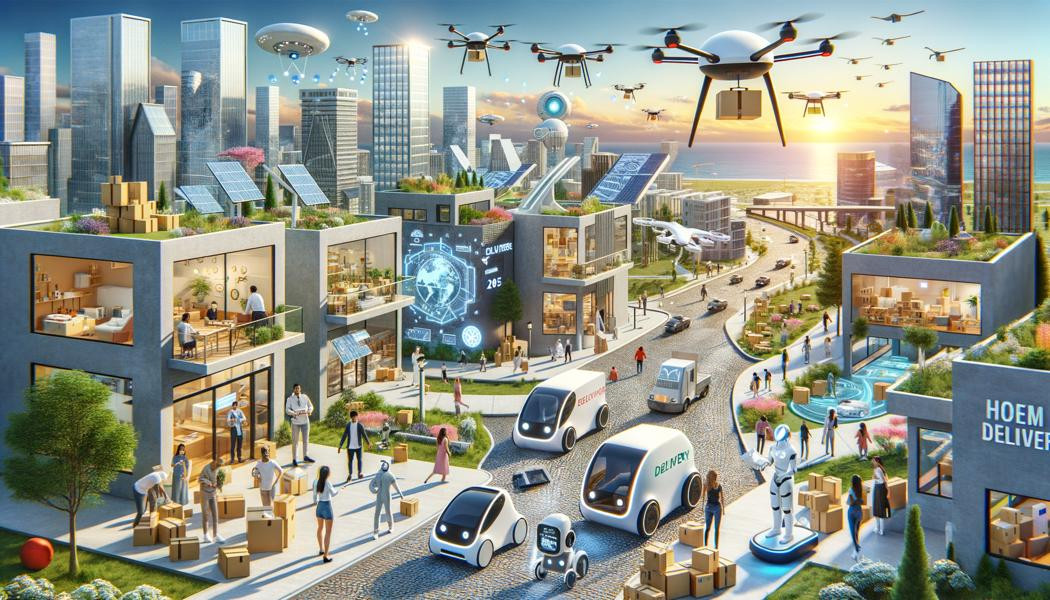
In a world where commerce is evolving rapidly, home delivery has become an essential part of our daily lives. This article looks at the innovations that are revolutionizing the home delivery sector in 2025. We will explore new trends, emerging technologies, as well as the impact of drones and sustainability on this dynamic field. In parallel, we will discuss the challenges companies must overcome in the face of these changes. The need to adjust delivery strategies and to consider ethical questions related to these new practices is crucial in order to guarantee an optimal customer experience.
Do you need help with home delivery? Quickly find a qualified provider on Helplease and benefit from a customized service to meet all your needs. Discover professionals near you!Summary
- What are the main innovations in home delivery in 2025?
- How are emerging technologies transforming home delivery?
- What impact will drones have on home delivery in the coming years?
- How does sustainability influence the evolution of home delivery?
- What logistical innovations are improving the customer experience in home delivery?
- What challenges are companies facing with these new trends?
- How does artificial intelligence optimize home delivery processes?
- Which home delivery services will become essential in 2025?
- How is online retail adapting its delivery strategies for 2025?
- What ethical questions are raised by the evolution of home delivery?
- How has the COVID-19 pandemic influenced home delivery habits?
- What consumer feedback can enlighten future delivery innovations?
What are the main innovations in home delivery in 2025?
In 2025, the innovations in home delivery are marked by unprecedented automation. Companies are investing in autonomous technologies, such as delivery robots, capable of navigating urban areas to bring parcels directly to customers. This innovation reduces delivery times and operational costs for businesses.
Furthermore, real-time tracking systems are becoming more sophisticated, allowing customers to follow every step of their delivery. These advancements increase transparency and improve customer satisfaction, as consumers are now better informed about the status of their orders.
Delivery solutions using bicycles and electric vehicles, which complement traditional methods, have also gained momentum. These alternatives are especially appreciated in densely populated urban areas, where road congestion presents a real challenge for freight transport.
Finally, the concept of "contactless delivery" continues to develop, not only for health reasons, but also to meet the growing security expectations of consumers.
The rise of delivery robots
Delivery robots, like those deployed by companies such as Starship Technologies, are becoming common in large cities. They are programmed to autonomously deliver parcels, which optimizes the process and reduces labor costs.
Transparency thanks to tracking systems
The implementation of advanced tracking systems allows customers to know the status of their delivery at every stage. Specially designed apps provide real-time updates, thus improving the customer experience.
How are emerging technologies transforming home delivery?
Emerging technologies, such as artificial intelligence (AI) and the Internet of Things (IoT), play a key role in transforming home delivery. Thanks to AI, companies can analyze massive amounts of data to predict consumption trends and optimize their delivery services.
The use of IoT also makes it easier to track parcels and monitor environmental conditions during transport. Embedded sensors in packaging provide crucial data, such as temperature and humidity, to ensure the quality of delivered products, especially for perishable goods.
Route optimization algorithms, powered by Big Data, allow delivery services to reduce their carbon footprint while improving efficiency. These innovations are crucial, as they address the growing demand for fast and eco-friendly deliveries.
In summary, emerging technologies are not only changing how deliveries are made, but also the overall customer experience, offering more personalized and efficient services.
Impact of artificial intelligence
Artificial intelligence optimizes logistics processes, from inventory management to route planning. By analyzing customer data, AI enables the offering of personalized delivery options that better meet consumer expectations.
Examples of Internet of Things
The Internet of Things enables instant parcel tracking, thanks to sensors embedded in packaging. This creates transparency appreciated by consumers and strengthens trust in companies.
What impact will drones have on home delivery in the coming years?
The use of drones for home delivery is about to become commonplace. Indeed, these devices can cover short distances at impressive speeds, significantly reducing delivery times. Companies like Amazon and Google are already experimenting with drone delivery services in certain regions.
Drones also make it possible to reach isolated or high-density urban areas where traditional vehicles encounter difficulties. They can deliver parcels directly to the customer’s doorstep, thus reducing transport costs.
Moreover, delivery by drone is more eco-friendly as it uses renewable energy systems and reduces the need for fossil fuels. This not only meets consumer expectations but also contributes to companies’ sustainability objectives.
However, regulatory challenges remain. Integrating drones into urban airspace requires suitable infrastructure and precise regulations to guarantee the safety of deliveries.
Revolutionizing delivery timelines
Drones enable almost instant delivery, redefining market standards. This becomes a major competitive advantage for companies that adopt this technology.
Regulatory questions
Regulations concerning the use of drones for delivery must evolve alongside technological innovations. Creating clear and safe regulations is essential for the implementation of this service.
How does sustainability influence the evolution of home delivery?
Sustainability has become imperative in the home delivery sector. Consumers are increasingly sensitive to the environmental impact of their choices, pushing companies to adopt more environmentally friendly practices. As a result, many companies are investing in electric vehicle fleets and greener logistics.
Moreover, the use of eco-friendly packaging is on the rise. Companies are seeking to reduce their plastic footprint and use recyclable or compostable materials for their packaging. This initiative not only meets consumer expectations but also helps preserve the environment.
In parallel, collaborative delivery models are emerging, where consumers are encouraged to group their orders to reduce delivery trips. These models promote a more responsible and sustainable system, limiting the number of kilometers traveled by delivery vehicles.
Lastly, carbon offset initiatives are multiplying. Companies offer customers the possibility to offset the carbon footprint of their delivery by contributing to reforestation or renewable energy projects.
Electric vehicle fleet
Electric vehicle delivery fleets represent one of the most promising solutions for reducing CO2 emissions. Companies investing in this transition can not only decrease their environmental impact but also benefit from a better brand image.
Eco-friendly packaging
Switching to eco-friendly and recyclable packaging is essential to meet the growing demand for sustainability. It demonstrates companies’ commitment to a greener future.
What logistical innovations are improving the customer experience in home delivery?
Logistical innovations play a primary role in improving the customer experience regarding home delivery. Among these innovations, the implementation of optimized order preparation solutions facilitates the process of collecting and shipping products.
Advanced technologies, such as the use of artificial intelligence for inventory management and route planning, help shorten delivery times and reduce errors in order processing. This leads to increased customer satisfaction.
Additionally, the possibility to personalize delivery options, such as choosing the delivery time or the drop-off location, meets customers’ specific expectations, making the shopping experience more enjoyable.
Companies are also innovating by providing transparent communication channels, allowing customers to ask questions or report issues during delivery, fostering better interaction and increased loyalty.
Optimized inventory management
Optimizing inventory through advanced management systems allows businesses to reduce order processing times and avoid stockouts, ensuring that customers get the products they want on time.
Personalized delivery options
Personalization of delivery services, allowing customers to choose their time slots or change their delivery addresses, enhances the customer experience and promotes a positive interaction with the brand.
What challenges are companies facing with these new trends?
Despite numerous technological advancements and innovations, home delivery companies face several major challenges. One of the main challenges is managing logistics in real time, especially during peak demand periods. This requires rigorous planning and adequate resources to ensure fast and efficient deliveries.
In addition, businesses must constantly adapt to rapidly evolving consumer expectations. Providing quality, fast, and sustainable service at controlled costs is a real balancing act, necessitating significant investments in technologies and employee training.
Transport, safety, and environmental regulations can also be a hindrance for some companies, especially SMEs that do not have the resources to comply with legal requirements.
Finally, customer retention in an increasingly competitive market is a major challenge. Companies must not only attract new customers but also retain their existing base by offering distinctive services and an optimal customer experience.
Real-time logistics management
Managing logistics in real time and anticipating demand peaks requires robust IT systems and organizational flexibility, which not all businesses can afford.
Regulatory compliance
Compliance with delivery regulations is crucial, but it also represents a cost and a challenge, especially for small businesses.
How does artificial intelligence optimize home delivery processes?
Artificial intelligence is an essential tool for optimizing home delivery processes. Through powerful algorithms, it enables real-time demand forecasting and optimization of delivery routes. This results in reduced delivery times and operational costs.
AI also facilitates inventory management by predicting future needs using analysis of historical data and purchasing trends. Thus, companies can ensure they have the products in stock and avoid shortages.
AI-powered chatbots are also increasingly used in customer service. They can instantly answer customer questions, which improves satisfaction and reduces the workload on human employees.
Finally, AI enables greater personalization of the shopping experience. By analyzing purchasing behaviors, businesses can offer specific product recommendations, thereby increasing conversion rates.
Optimization of delivery routes
Thanks to AI-based optimization tools, companies can plan the most efficient delivery routes, thereby reducing the carbon emissions generated by transport.
Forecasting inventory needs
The ability to forecast inventory needs allows businesses to maintain adequate stock levels, thus avoiding stockouts and ensuring customer satisfaction.
Which home delivery services will become essential in 2025?
In 2025, several home delivery services are expected to become essential. Among them, express delivery will stand out. Consumers, accustomed to ever-shorter delivery times, will demand solutions able to bring their parcels the same day or within a few hours of ordering.
Scheduled delivery services, where customers can plan their deliveries according to their schedules, will also be in high demand. This will offer consumers a new level of flexibility and comfort.
At the same time, the ability to have parcels delivered directly to pickup points, such as lockers or local shops, will become increasingly popular. This will allow customers to collect their parcels at their convenience and reduce the risk of theft.
The rise of delivery by drones will continue to transform the home delivery landscape, providing unprecedented speed of service for certain types of goods.
Express delivery services
Express delivery services will become the norm to meet the expectations of busy customers who want reliable and fast solutions for their online purchases.
Scheduled delivery
The ability to schedule deliveries at the customer’s convenience will become a substantial competitive advantage for businesses, thereby increasing customer satisfaction.
How is online retail adapting its delivery strategies for 2025?
Online retail platforms are adapting their delivery strategies to a rapidly evolving market. The integration of advanced logistics solutions, such as partnerships with specialized delivery companies, enables e-tailers to manage parcel shipping more efficiently.
Furthermore, the development of omnichannel delivery, which combines online shopping with in-store experiences, is increasingly common. Customers can purchase online and choose to pick up their items in store or have them shipped.
Companies are also investing in customer data analysis to improve the delivery experience. By clearly understanding consumers’ purchasing preferences, they can tailor their offers and delivery times.
Finally, there is a stronger focus on sustainability, with initiatives aiming to offer environmentally-friendly delivery options, in response to the growing demand for responsible practices.
Integration of advanced logistics solutions
The implementation of advanced logistics systems allows better management of parcel and order flows, ensuring rapid and efficient processing.
Development of omnichannel delivery
The omnichannel approach combines the best of both worlds, offering customers the choice between home delivery or in-store pickup, depending on their preferences.
What ethical questions are raised by the evolution of home delivery?
The evolution of home delivery raises several ethical questions regarding the protection of consumers’ personal data and the environmental impact of delivery practices. Companies must guarantee the confidentiality of customer information while using such data to personalize the shopping experience.
Drone delivery also raises questions about safety, potential impact on airspace, and the implications for employment in traditional logistics sectors.
Furthermore, the increasing use of autonomous vehicles and delivery robots raises questions about the necessity of appropriate regulations to ensure that they do not endanger pedestrians or other road users.
Finally, the development of sustainable delivery practices also questions companies’ ability to balance profitability and social responsibility, while being mindful of the ethical sourcing of their products.
Protection of personal data
With the increasing collection of data to offer a personalized experience, companies must ensure the security and confidentiality of consumers' data.
Employment questions
The rise of automation in home delivery may lead to job losses in the logistics sector, raising questions about the need for reskilling and training for employees.
How has the COVID-19 pandemic influenced home delivery habits?
The COVID-19 pandemic has deeply transformed consumption and home delivery habits. With limited access to physical stores, more and more consumers have turned to online shopping, increasing the demand for delivery services.
Companies were compelled to adapt their services to meet this increased demand, implementing safety protocols such as contactless delivery. Customers now seek safe and fast solutions, leading to the emergence of services that guarantee adherence to health measures.
Additionally, the pandemic highlighted the importance of sustainability; consumers have become more aware of the environmental impact of their purchases and choose more responsible delivery options.
This period was also a catalyst for companies, which realized that their resilience depended on their ability to evolve and meet customer expectations in the face of unforeseen situations.
Acceleration of online retail
The need to stay home triggered a boom in online shopping, transforming customers’ consumption and delivery habits.
Increased demand for secure solutions
Companies were forced to quickly adopt enhanced safety protocols to reassure consumers about the security of their deliveries.
What consumer feedback can enlighten future delivery innovations?
Consumer feedback is essential for guiding future delivery innovations. Surveys and direct feedback allow companies to better understand customer expectations and preferences.
Studies show that customers appreciate transparency, communication, and speed in their deliveries. As a result, innovative companies focus their efforts on improving these aspects, using technologies to facilitate tracking and communication.
Feedback also highlights the importance of flexible delivery options, allowing customers to choose delivery times or modify their addresses if necessary. These options are now considered indispensable standards.
In conclusion, companies that take this feedback into account and adapt their services accordingly will be better positioned to meet consumer expectations and succeed in a constantly evolving market.
Importance of transparency and communication
Consumers value transparency in the delivery process, and companies that communicate effectively about order status enjoy a more loyal customer base.
Flexibility in delivery options
Customer feedback highlights the need for flexibility in delivery options, making it essential to develop services that can adapt to the ever-changing expectations of consumers.
Conclusion
In summary, the innovations shaping home delivery in 2025 are mainly driven by technological advances, the growing consumer demand for fast and sustainable services, and heightened awareness of ethical and environmental concerns. Companies must navigate a complex landscape while adapting to new consumption habits and remaining accountable for the societal impact of their practices. By listening to consumer feedback, those in the home delivery sector can turn these challenges into opportunities to offer more innovative and effective solutions.
Whether you need quick help or want to offer your services, Helplease is your solution! Download the app to access qualified experts or find clients with one click, and simplify your daily life! Available on iOS and Android!