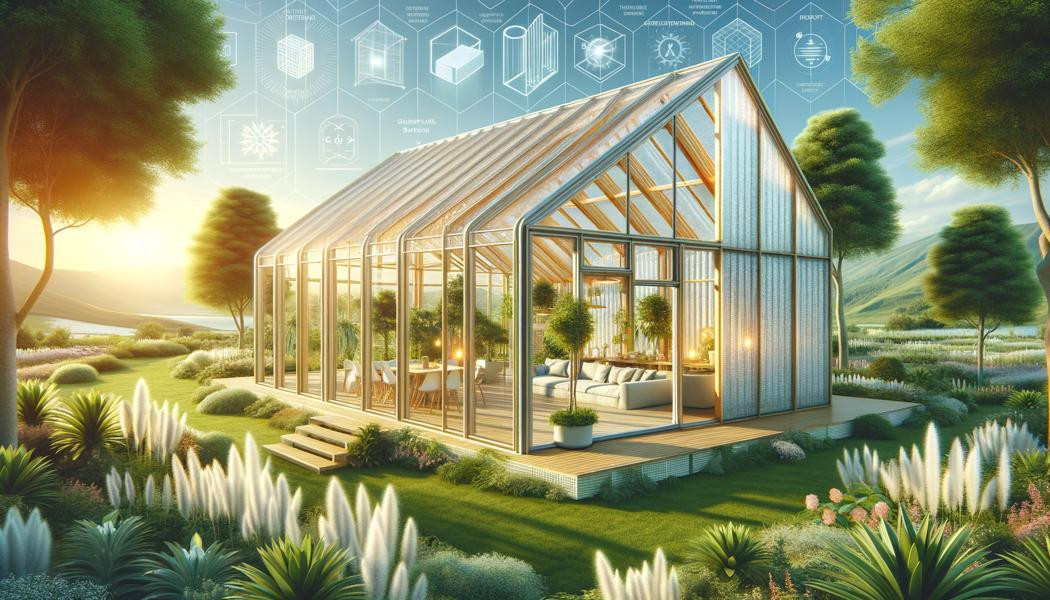
In this article, we will explore how to choose the perfect insulation materials for greenhouses in 2025. With the constant evolution of technologies and environmental needs, it is essential to understand which materials offer the best insulation performance. We will discuss the different types of materials available, their properties, as well as the criteria to consider when selecting them. In addition, we will examine the importance of insulation in the sustainability and energy efficiency of greenhouses.
Summary
- Which insulation materials are most suitable for greenhouses in 2025?
- How does the evolution of technologies influence the choice of insulation materials?
- What are the essential properties of insulation materials for greenhouses?
- How to evaluate the energy efficiency of insulation materials?
- What criteria should be considered when choosing an insulation material for a greenhouse?
- What are the advantages and disadvantages of different types of insulating glazing?
- How do local climatic conditions influence the choice of materials?
- What are the innovative solutions in insulation for greenhouses?
- Why is it important to properly insulate your greenhouse?
- Which insulation materials are the most durable and eco-friendly?
- How to maintain and replace insulation materials in a greenhouse?
- What tips to optimize the insulation of your greenhouse according to its use?
Which insulation materials are most suitable for greenhouses in 2025?
In 2025, the choice of insulation materials for greenhouses is more crucial than ever. With an emphasis on energy efficiency and sustainability, the selected materials must meet high standards. Among the most suitable materials are sandwich panels, polycarbonate, and tempered glass. Each of these materials offers specific properties that can greatly influence the overall greenhouse performance.
Sandwich panels are valued for their lightness and thermal insulation capacity. They combine an inner layer of insulating foam with two layers of material, thus providing effective insulation with reduced weight. On the other hand, polycarbonate is known for its shock resistance and its ability to filter UV rays, which helps protect plants while maintaining a stable environment inside the greenhouse.
Tempered glass is another top choice for high-end greenhouses. Although more expensive, it offers exceptional clarity and unmatched durability. Its ability to withstand bad weather while letting in a maximum amount of light makes it a preferred choice for serious growers.
Thus, the choice of insulation materials for greenhouses in 2025 must be considered carefully, taking into account climatic needs, durability, and energy efficiency.
The different types of insulation materials
When it comes to choosing insulation materials for greenhouses, it is essential to consider the various types available. Synthetic insulators, such as polyurethane foam and expanded polystyrene, offer an excellent solution in terms of performance/cost ratio. They are easy to install and provide good thermal resistance.
Comparison of insulating performance
When comparing insulating performance, it is noted that certain materials, such as double-walled polycarbonate, have lower thermal conductivity coefficients than standard glass, making them a better choice for retaining heat during cold nights.
How does the evolution of technologies influence the choice of insulation materials?
The evolution of technologies has transformed the landscape of insulation materials for greenhouses. Innovations in the field of synthetic materials have led to the development of more efficient and durable products. For example, new insulated panel manufacturing technologies have resulted in lighter and more resistant structures, while providing improved thermal insulation.
In addition, the rise of ecology and sustainability also influences the choice of materials. Manufacturers are now seeking to produce insulation from renewable sources. This includes the use of recycled materials and biodegradable solutions that reduce environmental impact.
Coating technologies, such as reflective films, also play a decisive role. These films help increase the efficiency of greenhouse thermal insulation, reflecting heat during the day and retaining heat at night.
Finally, with the advent of the Internet of Things (IoT), it is possible to monitor the performance of insulation materials in real time via sensors. This data allows growers to optimize internal greenhouse conditions to promote plant growth.
Technological innovations in insulation
Technological innovations in insulation include the emergence of new composite materials, combining several properties for optimal performance. Recent studies show that the use of smart membranes, which change characteristics depending on ambient temperature, could revolutionize greenhouse design.
Environmental impact of insulating materials
The environmental impact of materials has become a major concern. Choosing eco-friendly materials not only reduces waste but also improves the sustainability of the greenhouse by reducing long-term energy needs.
What are the essential properties of insulation materials for greenhouses?
Insulation materials for greenhouses must have certain essential properties to ensure effective performance. One of the most important aspects is thermal conductivity, which measures the ability of a material to conduct heat. A good insulation material must have low conductivity to prevent heat loss during cold nights.
Other properties include resistance to shocks and bad weather. Materials must be able to withstand extreme climatic conditions, such as storms or hail, while maintaining their structural integrity. Ventilation is also essential to allow good air exchange, thus promoting plant health.
Also, the lightness of the material is a parameter not to be ignored. Heavy materials can cause structural issues in the long term. Thus, modern materials must be both light and robust.
Finally, energy efficiency is paramount. Materials must help reduce energy costs by maximizing the use of natural light and minimizing heating or cooling consumption.
Thermal conductivity
Thermal conductivity is a key factor as it determines a material's ability to slow down heat loss. Materials with low thermal conductivity are ideal for maintaining a stable temperature in the greenhouse, thus promoting better plant growth.
Weather resistance
A material's ability to withstand bad weather is crucial to ensure the greenhouse's durability. Materials must be able to cope with rain, snow, and temperature variations without degrading.
How to evaluate the energy efficiency of insulation materials?
Evaluating the energy efficiency of insulation materials involves several criteria. One of the most obvious is the thermal transmittance coefficient, often called U-value. The lower this coefficient, the better the insulation. It is essential to compare it with current standards to determine if a material is effective.
Evaluation should also take into account fire and moisture resistance tests. A good material must not only insulate but also resist degradation and mold, to ensure long-term durability.
Laboratory testing methods, such as thermal resistance tests, are commonly used to assess the performance of insulation materials. These tests simulate real conditions to provide accurate data on the thermal, mechanical, and environmental characteristics of the material.
To complete the evaluation, life cycle analysis (LCA) is a valuable tool. It examines not only thermal performance, but also the environmental impact of the material from production to disposal.
Thermal transmittance coefficient
The thermal transmittance coefficient is a crucial indicator for judging the efficiency of an insulation material. The energy costs associated with temperature management in the greenhouse depend directly on this coefficient. As a result, using materials with a low coefficient can lead to substantial savings in the long term.
Resistance tests
Fire and moisture resistance tests are essential to ensure that materials do not pose a safety risk. By using well-established testing standards, stakeholders can verify that their choice of materials is both reliable and safe for their crops.
What criteria should be considered when choosing an insulation material for a greenhouse?
Several criteria should be considered when choosing an insulation material for a greenhouse. First, cost is often a decisive factor, both for the material and its installation. Assessing whether the initial investment will yield long-term savings is essential for the economic viability of the project.
Next, durability plays a crucial role. Materials must have a long lifespan and be able to withstand wear and tear over time, which will reduce maintenance costs.
Ease of installation and maintenance is also to be considered. A material that requires little maintenance and is easy to install can save time and effort in the long run.
Finally, it is important to consider the environmental impact of the material. Choosing sustainable and environmentally friendly options contributes to the sustainability of the greenhouse while reducing its carbon footprint.
Cost and economic viability
Assessing the total cost of materials and their installation is fundamental for ensuring the economic viability of the greenhouse project. By analyzing potential energy savings over the lifespan of the material, owners can make informed choices.
Durability and maintenance
Materials should be chosen based on their durability to ensure long-lasting use without problems. This also involves considering maintenance needs, which should be minimal to facilitate greenhouse management.
What are the advantages and disadvantages of different types of insulating glazing?
The different types of insulating glazing present various advantages and disadvantages. For example, single glazing is generally less expensive, but it offers limited thermal insulation. In contrast, double glazing is more costly but provides much better thermal performance, making it a wise choice for greenhouses where energy savings are crucial.
Another type, low-emissivity (Low-E) glazing, is specially designed to minimize heat loss while letting in a large amount of light. However, its higher initial cost can be a barrier for some growers.
Ultimately, the choice of glazing should be adapted to local climatic conditions and the type of crops to be sheltered, in order to optimize thermal benefits while ensuring adequate brightness inside the greenhouse.
Single and double glazing
Single glazing is suitable for temporary structures or mild climatic conditions. Double glazing is recommended for cold regions where thermal insulation is essential for protecting crops.
Low-E glazing
Low-E glazing, although more expensive, not only helps retain heat but also protects plants from harmful UV rays. This makes it an ideal investment for greenhouses intended for vegetable or flower crops sensitive to light.
How do local climatic conditions influence the choice of materials?
Local climatic conditions are a determining factor in the choice of insulation materials for a greenhouse. In cold regions, materials with better thermal insulation properties will be favored to retain heat. High-performance thermal insulation panels can offer considerable benefits in these situations.
Conversely, in hot regions, it is important to opt for materials that offer good temperature regulation and prioritize heat dissipation. Reflective materials or special membranes can help reduce excess heat, thus protecting crops from overheating.
In addition, humidity and rainfall must be taken into account. Materials must not only be able to withstand moisture but also resist mold and degradation caused by prolonged exposure to water.
Growers should therefore adapt their choice of materials based on their environment to maximize the benefits of insulation while preventing damage to greenhouses and crops.
Adaptation to cold climates
In cold climates, thermal insulation becomes paramount. The materials selected must offer increased resistance to minimize heat loss, which will protect crops from nighttime frosts.
Preferences in hot climates
Conversely, in hot climates, the focus can be on materials that promote air circulation and minimize overheating. Selecting glazing systems that allow for adequate ventilation will help regulate temperature, promoting an ideal microclimate for crops.
What are the innovative solutions in insulation for greenhouses?
Innovative solutions in insulation for greenhouses are constantly evolving. The use of integrated photovoltaic panels in glazing is one notable advancement. Not only do they provide protection from the elements, but they also contribute energy for greenhouse needs, making the whole system more autonomous and sustainable.
Moreover, advanced climate control systems using sensors allow growers to optimize the internal conditions of greenhouses. These systems automatically adjust ventilation, humidity, and temperature, thus ensuring an optimal environment for crops.
Furthermore, the adoption of nanostructured materials offers new promises for improving insulating performance. This type of material can be designed to specifically meet local requirements, both in terms of thermal properties and resistance to bad weather.
Finally, the incorporation of vertical gardens into greenhouse design can also play a key role in thermal insulation, offering an extra layer of protection against extreme temperatures.
Integrated photovoltaic panels
Integrated photovoltaic panels not only produce energy but also protect crops while improving the overall energy efficiency of the greenhouse.
Climate control systems
Intelligent climate control systems automatically optimize internal conditions, thus increasing crop efficiency and reducing resource waste.
Why is it important to properly insulate your greenhouse?
Properly insulating your greenhouse is essential for several reasons. First, it helps thermal regulation, allowing you to maintain an adequate temperature for plant growth, regardless of external weather conditions.
In addition, good insulation reduces energy costs by limiting the need for heating or air conditioning. This represents a significant economic advantage in the long term, especially in climates with large temperature fluctuations.
Good insulation also protects crops from sudden fluctuations in heat and humidity, thereby creating a more stable growth environment. This overall improves plant health and increases yields.
Finally, for environmentally conscious growers, effective insulation contributes to a sustainable approach, reducing the carbon footprint and optimizing the use of resources.
Thermal regulation
The ability of a greenhouse to maintain a stable temperature is directly related to the efficiency of its insulation. Good thermal regulation promotes optimal plant growth.
Energy savings
Investing in quality insulation materials allows for significant savings on energy costs associated with greenhouse climate management.
Which insulation materials are the most durable and eco-friendly?
In a context of increased sustainability, it has become crucial to choose insulation materials that are both efficient and environmentally friendly. Cork, for example, is a natural material that offers excellent insulation properties while being biodegradable.
Recycled materials, such as insulating panels made from recycled plastic, are also an increasingly popular eco-friendly option. These products help reduce plastic waste while providing efficient insulating properties.
Hemp and sheep's wool are other eco-friendly choices which, although requiring specific treatment, are not only durable but also safe for crops, improving air quality inside greenhouses.
By opting for these materials, growers can reduce their environmental footprint while ensuring the energy performance of their installations.
Natural materials
Natural materials like cork and hemp are increasingly prized for their excellent insulating properties and minimal environmental impact, thus offering a sustainable alternative to traditional synthetic insulators.
Recycled materials
Using recycled materials not only helps fight against waste but also optimizes the energy efficiency of greenhouses, offering a practical and eco-friendly solution.
How to maintain and replace insulation materials in a greenhouse?
Maintenance of insulation materials is essential to maintain their efficiency over time. Regular inspection of materials, as well as cleaning of surfaces, will help prolong their lifespan by removing dust and debris that can affect their performance.
In case of degradation, it is crucial to quickly replace damaged materials to avoid heat loss. Polycarbonate insulation systems, for example, can sometimes show signs of yellowing or cracking, thus compromising their efficiency. Quick replacement is therefore essential to avoid long-term financial consequences.
Furthermore, growers should be aware of signs of moisture and mold, which could indicate insufficient protection. Repairs may be necessary to ensure the integrity of the entire structure.
Finally, establishing a preventive maintenance program can greatly contribute to the durability of insulation materials, thus reducing the need for frequent replacements.
Regular inspection
Regular inspection of insulation materials allows you to quickly identify signs of wear or degradation, thus ensuring the implementation of necessary corrective actions.
Replacement of materials
Timely replacement of damaged materials is a crucial action to maintain the energy efficiency of the greenhouse, and proactive management can reduce long-term costs.
What tips to optimize the insulation of your greenhouse according to its use?
To optimize the insulation of your greenhouse, it is essential to first assess the specific needs of the crops grown. Some crops require more stable temperatures than others and therefore call for adapted insulation solutions.
In addition, the orientation of the greenhouse in relation to the sun can influence the choice of materials: maximizing light exposure while maintaining adequate heat is important. Solar panels and assisted ventilation systems can also help manage temperature.
Integrating water recycling and humidity management systems can also enhance insulation efficiency, thus improving the overall growth environment.
Finally, it is useful to call on greenhouse design experts to ensure that all these elements are taken into account during planning and construction, thereby guaranteeing optimal insulation performance.
Assessment of specific needs
Assessing the specific thermal needs of crops is essential to choose the appropriate insulation materials and optimize plant health.
Integration of additional systems
Integrating systems such as water management and assisted ventilation not only leads to better insulation but also optimizes growing conditions in the greenhouse.
Conclusion
Choosing the perfect insulation materials for your greenhouse in 2025 requires a thoughtful approach to the various factors involved. By taking into account technological advances, local climatic conditions, and the fundamental properties of materials, growers can optimize the energy efficiency and sustainability of their greenhouses. Moreover, with the constant evolution of the materials market, it is crucial to stay updated on innovations and best practices in insulation. In conclusion, investing in quality materials and adapting choices according to the specific needs of crops are essential steps to ensure the success of any greenhouse farming operation.
Whether you need quick assistance or want to offer your services, Helplease is your solution! Download the app to access qualified experts or find clients with one click, and simplify your daily life! Available on iOS and Android!