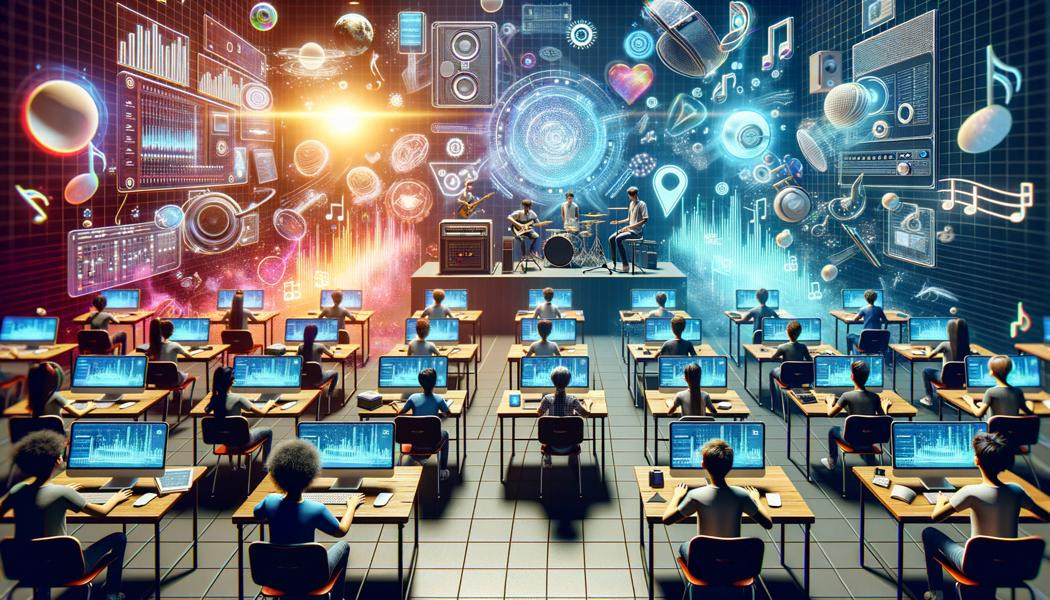
In a constantly evolving world, technology plays a pivotal role in music education in 2025. This article explores how technology is transforming music education, essential digital tools, emerging trends, and much more. By integrating these innovations, we are beginning to redefine how music is taught and learned, making music education more accessible and engaging. Whether you are a teacher, student, or music enthusiast, understanding these developments is crucial for making the most of your musical experience.
Need help exploring technology in music education? Quickly find a qualified provider on Helplease and benefit from a customized service to meet all your needs.Summary
- How is technology transforming music education in 2025?
- Which digital tools are essential for music teaching?
- What are the emerging trends in educational music technology?
- How does online learning influence music training?
- Which mobile applications can help with instrument learning?
- What is the impact of artificial intelligence in music education?
- How are streaming platforms transforming music access?
- What are the advantages and disadvantages of digital music teaching?
- How are virtual and augmented reality revolutionizing music education?
- What technological skills do music teachers need to acquire?
- How to assess music learning in the digital age?
- What are the forecasts for the future of technology in music education?
How is technology transforming music education in 2025?
Technology has radically transformed music education, offering new possibilities for learning and engagement. Thanks to digital tools, teachers can create interactive learning environments that stimulate creativity and personal expression. Online platforms allow students to access a variety of resources, from video tutorials to lectures delivered by international experts. This accessibility changes the traditional learning dynamic, making it more inclusive.
Technological advancements such as educational apps and learning management systems allow real-time tracking of student progress. Teachers can also adapt their teaching methods to meet the specific needs of each student, thus ensuring individualized support. Moreover, data collected through these tools offer valuable insights into the effectiveness of teaching methods.
The digitization of music also allows a deeper exploration of works. Learners can listen to different versions of the same piece, analyze various interpretations, and explore diverse musical styles with music creation software. Thanks to this variety, music education becomes a fertile ground for experimentation, encouraging students to develop their own artistic sensibility.
In summary, technology is a driver of evolution for music education in 2025, promoting both accessibility and interaction while enriching the learning experience.
Professionals, looking for more clients? Register on Helplease today to offer your services and grow your business. Access a wide client base in just a few clicks!Which digital tools are essential for music teaching?
Digital tools play a crucial role in music teaching. Among the most important, musical notation software like Sibelius or Finale, allows teachers and students to compose and edit scores easily. These tools facilitate melody creation and arrangement, making the composition process accessible to everyone.
Online learning platforms, such as Moodle or Google Classroom, offer a comprehensive solution for attending courses and sharing resources. They enable teachers to manage educational materials, communicate with students, and evaluate their work efficiently. In addition, forums and online discussion groups encourage exchanges among students, promoting collaboration and experience sharing.
Mobile applications for instrument learning, such as Yousician or Simply Piano, allow students to practice at their own pace. These apps include interactive features, like instant feedback, essential for rapid progress. Users can learn new pieces while receiving personalized advice, making learning fun and motivating.
In conclusion, digital tools are of utmost importance in music teaching because they facilitate creation, communication, and learning, thus providing a better educational experience.
If you are looking for an expert to meet your specific needs, visit Helplease and discover available providers near you. Simplify your life and find the right professional!What are the emerging trends in educational music technology?
In 2025, several emerging trends are appearing in music education. The integration of augmented reality (AR) in music learning is undoubtedly one of the most notable. This technology enables students to visualize musical concepts interactively, making learning more immersive and engaging.
Additionally, artificial intelligence (AI) is beginning to play a vital role. AI-based platforms can analyze students' performances, give them personalized feedback, and even create courses tailored to their level. This fosters a highly individualized and dynamic learning approach.
Moreover, the rising popularity of virtual learning communities offers students the opportunity to collaborate with peers worldwide. This collaborative approach enriches each learner’s cultural and artistic perspectives by exposing them to different musical traditions and methodologies.
Finally, the shift towards hybrid learning, combining in-person and online teaching, seems promising. This model offers flexibility and accessibility, allowing students to benefit from the advantages of both teaching methods.
How does online learning influence music training?
Online learning has transformed music training, offering unprecedented access opportunities. Digital platforms allow students to access courses, tutorials, and teaching resources anytime and from anywhere. This facilitates self-practice, particularly beneficial for those without access to in-person lessons.
Training and learning materials can now be adapted to individual paces. Students can review lessons and practice at their own speed, enhancing their understanding and mastery of instruments. This flexible learning model also promotes the development of self-discipline.
However, online learning also presents challenges. The lack of face-to-face interaction may create a feeling of isolation. Therefore, it is essential to balance digital learning with social interactions within the music community, be it through study groups or group lessons.
Ultimately, online learning continues to positively influence music training by making education more accessible while encouraging personalized learning methods.
Which mobile applications can help with instrument learning?
Many mobile applications are now available to support instrumental learning. Applications such as Yousician, offering courses for various instruments, enable users to learn at their own pace, with exercises and instant feedback on their playing.
Applications like Smart scale and Perfect Ear help musicians develop their musical ear by offering exercises for note recognition, harmony, and rhythm. These tools are essential for reinforcing students' listening skills, which are fundamental for any musician.
Applications such as GarageBand also give learners the chance to create and record their own music, thus stimulating their creativity. This allows students to explore not only technical learning but also music composition.
Finally, metronome applications, such as Pro Metronome, are crucial for musicians wishing to improve their sense of rhythm, a basic element in learning any instrument.
What is the impact of artificial intelligence in music education?
Artificial intelligence (AI) is becoming a major asset in music education. It creates personalized learning experiences tailored to each student's specific needs. AI platforms can analyze a student's performance and suggest custom resources and exercises to help them progress.
Furthermore, AI is used to create music analysis software that can assess performance quality in real-time. This provides instant feedback and helps students identify their strengths and weaknesses, which improves their learning.
Finally, AI is also present in assisted music composition. AI-based tools can generate melodies, harmonies, and arrangements, offering budding musicians inspiration and a starting point for their own creation. This opens up new possibilities for creating and interpreting music.
How are streaming platforms transforming music access?
Streaming platforms have revolutionized music access, making millions of tracks available at your fingertips. With services like Spotify, Apple Music, and YouTube, users can discover artists, genres, and musical styles they might never have explored otherwise.
This accessibility also has significant implications for music education. Teachers can incorporate a variety of pieces into their lessons, allowing students to broaden their musical horizons and learn within a richly varied context.
However, this abundance of choice may also make it difficult to select music to study. Thus, teachers need to guide their students in exploring content, teaching them how to appreciate and analyze different styles.
In conclusion, streaming platforms enrich the musical experience while providing educators with new resources to bring their lessons to life. They play a key role in how music is consumed and taught today.
What are the advantages and disadvantages of digital music teaching?
In the digital era, music education has both advantages and disadvantages. On the one hand, access to varied resources and engaging learning tools significantly enhances the learning experience. Students can work at their own pace and benefit from digital interactions that deepen their musical understanding.
However, digital music teaching can also have its limitations. Social engagement and direct interaction with teachers and peers may be lacking, which can detract from the overall learning experience. For some, the absence of immediate physical feedback or community support can be an obstacle.
Additionally, reliance on technology brings challenges, notably unequal access to digital tools. This raises the issue of inclusion and ensuring that every student, regardless of their socioeconomic background, can benefit from these innovations.
In short, while digital music teaching offers many opportunities, it is important to balance this learning with human interactions and ensure equal access to technological resources.
How are virtual reality and augmented reality revolutionizing music education?
Virtual reality (VR) and augmented reality (AR) are beginning to permeate music education, offering exciting new prospects for learning and teaching. These immersive technologies enable musical experiences in unprecedented ways. For example, augmented reality applications can overlay music learning elements onto a visual display, making theory more tangible and accessible.
Virtual reality, on the other hand, can transport students into simulated environments where they can interact with musical works or attend live performances without leaving home. This opens the door to collaborative experiences, allowing several students to meet in the same virtual space to create and play music together.
These technologies do not replace traditional learning methods but enrich music education by offering new dimensions and stimulating student engagement. By integrating VR and AR into teaching programs, educators can create engaging and memorable learning experiences.
What technological skills do music teachers need to acquire?
In today's music education landscape, it is essential for teachers to develop certain technological skills. One is proficiency with music creation and notation platforms, which allow not only for composition but also for sharing resources with students. Mastery of software like Ableton Live or Logic Pro can also enrich music teaching lessons.
Teachers should also familiarize themselves with digital classroom management tools, like Google Classroom, which facilitate communication and distribution of materials. This skill enables them to better organize course content and track student progress.
Moreover, understanding new trends, such as AI in music education and the possibilities provided by mobile applications, is crucial to deliver an up-to-date and relevant education. This allows them to integrate these new technologies into their own teaching process.
Finally, some skill in using social media to promote events, share performances, or create virtual communities around music education could strengthen the support between teachers and students.
How to assess music learning in the digital age?
Assessing music learning in a digital context requires a diverse and adaptable approach. Online assessment tools, such as quizzes and practical exams, allow for measuring student skills in real-time. In addition, using musical recording platforms enables teachers to listen to performances and provide constructive feedback.
Digital portfolios are also an effective way to assess students’ progress. By collecting their work, practice, and reflections, students can showcase their development over time. This method also encourages critical thinking, prompting them to reflect on their own learning.
Finally, incorporating peer feedback plays a key role by enabling students to learn from each other and improve collectively. By creating a collaborative learning environment, teachers can encourage mutual support that enriches the educational experience.
What are the forecasts for the future of technology in music education?
The forecasts for the future of technology in music education are promising. The ongoing integration of digital tools will become ever more pronounced, with the emergence of new applications and platforms. Personalization of learning through AI will also become more widespread, enabling even more tailored educational pathways for students.
Furthermore, virtual and augmented reality are expected to become standard features in music classrooms, offering a depth of interaction that transforms how music is taught and experienced. These technologies will make access to music education more inclusive and engaging.
Finally, global collaboration will be promoted through connected platforms, enabling students to work together regardless of geographic location. Different musical cultures will become more accessible, enriching music education on a global scale.
Conclusion
In summary, technology plays a crucial role in transforming music education in 2025. By integrating new digital tools, applications, and innovative methods, we are redefining the way music is taught and learned. This creates a more inclusive, engaging, and enriching learning environment, enabling everyone to thrive in the world of music.
Whether you need quick help or wish to offer your services, Helplease is your solution! Download the application to access qualified experts or find clients in just one click, and simplify your daily life! Available on iOS and Android!