

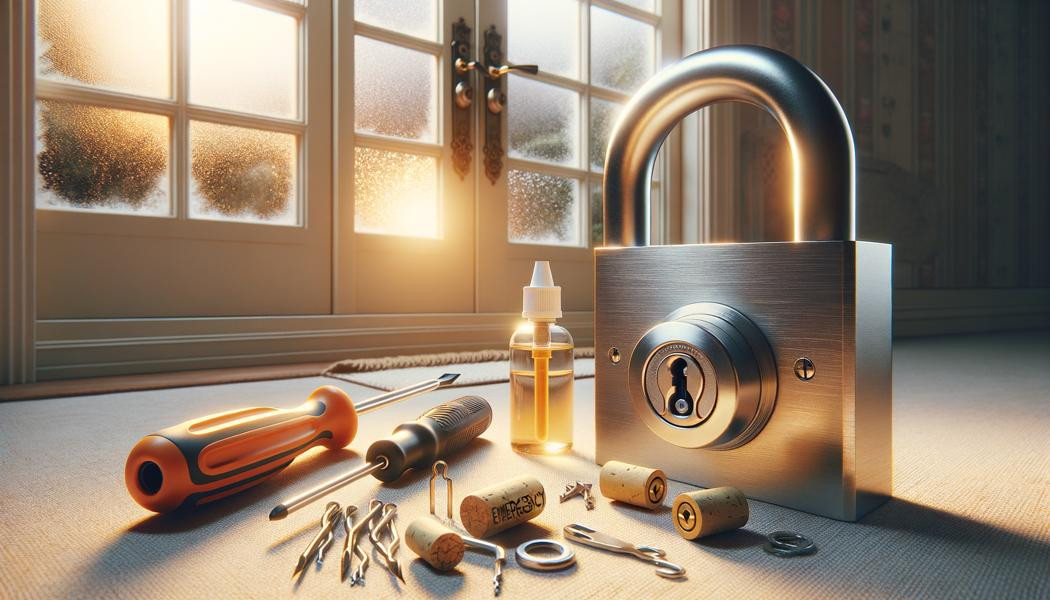
In our daily lives, locks play a crucial role in ensuring the security of our homes and belongings. However, emergency situations can arise, making a lock inaccessible right when you need it most. Whether it's due to lost keys, a jammed lock, or even a malfunctioning mechanism, knowing some DIY techniques to unlock a lock in an emergency can be very handy. This article discusses various emergency situations where it might be necessary to unlock a lock, the techniques to implement, the needed tools, and the precautions to take before attempting the unlocking method. By addressing these topics, we hope to provide practical solutions that could help you get out of a delicate situation.
Need help unlocking a lock? Quickly find a qualified service provider on Helplease and benefit from a tailored service to meet all your needs. Discover professionals near you!There are several emergency situations where it can become crucial to unlock a lock. The first and most common is losing your keys. Losing your keys when you need to enter your home can cause real panic, especially if you need to get in quickly to retrieve children or for security reasons.
Another emergency arises when the lock no longer functions due to a jammed mechanism. This can happen because of wear, dirt, or even a manufacturing defect. In such circumstances, it is common to feel frustrated and vulnerable without access to your home.
Weather conditions can also play a role. In winter, locks can freeze, making them very difficult to open. This type of situation often requires a quick intervention to avoid being locked outside in cold temperatures.
Finally, emergencies may include situations where someone is locked inside and needs to get out quickly, such as in a shooting or fire. In such cases, it may be necessary to unlock the lock as quickly as possible to ensure everyone's safety.
Professionals, looking for more clients? Register on Helplease today to offer your services and grow your business. Access a wide client base in just a few clicks!There are several effective DIY techniques to unlock a lock. One of the best-known methods is using a flat screwdriver to gently force the lock’s mechanism, thus potentially granting access. However, this method requires care to avoid damaging the lock.
Another technique involves using a lubricant, such as WD-40, which can help dislodge dirt or rust particles that are blocking the mechanism. Applying a lubricant inside the lock and turning it several times is often enough to unlock it.
Using household tools like a hook or even paperclips is also an option. By gently inserting these tools into the lock, it is often possible to spring the mechanism if you have a good understanding of how it works. This requires some patience and a keen sense of observation.
Finally, a combination of heat and cold, such as using a hairdryer on a frozen lock, can also unlock locks. The idea is to bring the lock to a temperature where the mechanism can work properly again.
The cork is an unconventional but effective tool for unlocking certain locks. When a lock is slightly obstructed, inserting a piece of cork can sometimes help trigger the internal movement of the mechanism. The idea is to create pressure that might allow the pins to rise without obstruction.
To use this technique, start by cutting a wine cork into pieces suitable for your lock’s size. Then apply gentle pressure while trying to turn the key or use another unlocking tool. This method generally works best on pin tumbler locks, where extra pressure can help push the pins into the correct position.
It’s important to note that this technique should only be used as a last resort when no other method has worked. Too much pressure can damage the lock or the mechanism, making any future unlocking attempt more difficult.
In summary, the cork can be a useful tool to unlock certain locks, but it requires caution and skill to avoid making the situation worse.
To unlock a lock without a key, several common tools can prove valuable. A screwdriver, for example, can be used to force the lock or to remove the faceplate for access to the mechanism. It’s a handy tool found in almost every home.
Pliers are also an effective tool, especially needle-nose pliers. They allow you to grip and manipulate metal pieces inside the lock, which can free the mechanism. Another option is to use an extractor if a key has broken inside the lock, helping you remove the trapped piece.
Lubrication products such as WD-40 or even household grease are valuable allies. They help the parts slide together and dislodge debris. Applying a spray inside the lock followed by an unlocking attempt can often work wonders.
Finally, a set of locksmith keys can allow you to try different locks and mechanisms, though these tools require some skill to use effectively. They are accessible to experienced DIYers looking to solve lock problems without calling an expert.
Before trying to unlock a lock, it is crucial to understand what type of lock is involved. This will allow you to choose the most appropriate method. Pin tumbler locks are among the most common in homes. For these, using a tool such as a hook could be effective.
Disc tumbler locks, on the other hand, require more precautions as they are designed to resist tampering attempts. Knowing the opening mechanism is essential in these cases. Card locks, which are becoming popular in advanced security systems, will require specific techniques to bypass them.
To determine the lock type, examine the shape and design of the key. A pin tumbler lock is often identifiable by its larger keyholes and easy insertion; disc tumbler locks may have a more complex mechanism, often surrounded or hidden.
Many modern locks are also equipped with additional features, such as electronic locks. In these cases, it might be wiser to call a professional rather than try DIY techniques. Understanding the type of lock to unlock will help avoid damaging the complex mechanism or worsening the initial problem.
Before you start unlocking a lock, it is essential to take certain precautions to avoid unnecessary damage and ensure your safety. First, make sure you have the right to access the lock in question. Always try to have proof of identity or authorization if it concerns property that does not belong to you. This helps avoid potential legal problems.
Next, it is recommended to assess the condition of the lock. If it appears broken or visibly damaged, an unlocking attempt could make things worse. In this case, it may be wiser to call a professional locksmith. Also, check for any danger warnings, such as illnesses inside or chemicals nearby.
When using tools during unlocking, be careful — injuries such as cuts or scrapes can easily occur. Wear protective gloves to avoid such issues. Preparing a safe workspace by keeping children and pets away from the vicinity of the lock is also very important.
Finally, if you are not confident in your technique or the method to use, do not hesitate to ask a friend for help or contact a professional to avoid worsening the situation. In summary, caution is essential when dealing with locks, to ensure your safety and the safety of your belongings.
Pin tumbler locks are among the most common mechanisms on doors. To unlock such a lock, using tools like a pick is essential. These tools are designed to lift the pins inside the lock. The classic method is to insert a pick tool while applying pressure on the bolt by turning the key or using a screwdriver.
Another method consists of using a “rake” which sweeps across the pins and quickly positions them in the correct configuration to unlock the lock. This technique requires experience and should be practiced by those wishing to perfect their unlocking skills.
Pin tumbler locks can also be unlocked by using a tension method, where you apply gentle pressure to the key or a tension tool during the picking operation. This helps keep the pins in place while lifting them. It is crucial to understand the lock’s mechanism so as not to damage internal components.
There are lock pick kits available on the market for pin tumbler locks that can make this task easier if you wish to explore this method. In conclusion, with a bit of patience and precision, several proven methods can unlock a pin tumbler lock effectively.
Dealing with a frozen lock in winter can be frustrating, but several methods can help solve this problem effectively. The first recommendation is to use gentle heat, such as a hairdryer. Directing warm air onto the lock for a few seconds can melt the ice, allowing the key to enter the mechanism.
Another method is to use rubbing alcohol. Apply a few drops around the key or directly into the lock; alcohol is an excellent solvent and helps melt the ice. Moreover, anti-freeze sprays specially designed for locks are also available commercially and should be used in case of emergency.
Finally, in periods of extreme cold, regular lubrication of locks with appropriate products before winter can help prevent freezing. This allows the internal mechanisms to slip more easily, reducing the likelihood of blockage by ice.
It is crucial to avoid forcing a frozen lock, as this could damage the key or the entire mechanism, making unlocking even more complicated. By taking these precautions, you can deal with a frozen lock effectively.
When trying to unlock a lock, it is essential to ensure you do not cause damage to it. First, it is imperative to use the right tools to avoid scratching or damaging the lock's surface. Inappropriate tools can also affect the internal mechanism and result in high repair costs.
Next, avoid applying too much force, whether by turning a key or using picking tools. Excessive force can break the pins or deform the lock's components. A more delicate approach is often the best strategy.
Another pertinent tip is to make sure the lock is clean before trying to unlock it. The accumulation of dust and dirt can cause operational problems. Using compressed air cans to blow away debris can often make a difference.
Finally, it is always preferable to opt for a method you are familiar with rather than trying a technique you are not sure of. If unlocking the lock seems too complex, calling a professional might be the wisest solution.
It is advisable to call a professional in several situations after trying to unlock a lock without success. If you notice that the lock shows obvious signs of damage, such as broken pieces, it is a sign that a more delicate intervention is necessary.
If all efforts have failed and the key or tool is now stuck inside the lock, continuing to try to open the lock yourself can cause more damage. Calling a locksmith can then prevent you from making the problem worse.
If you are unsure of your know-how and feel you might make things worse, it is wiser to contact an expert. A professional can apply the appropriate expertise and the right tools to handle the problem efficiently.
Finally, the presence of an emergency where safety is at stake, such as a fire or a break-in, immediately justifies calling a professional to ensure your safety and that of others.
Locks are available in several types, each with its own locking mechanisms. Pin tumbler locks are among the most common and operate with a system of pins that block the mechanism when the correct key is not inserted. When the right key is used, it lifts the pins above a threshold, allowing the door to be unlocked.
Disc tumbler locks, on the other hand, work with a set of discs that must be correctly aligned to grant access. This type of lock generally offers higher security, as it is more resistant to picking techniques.
Combination locks rely on a numeric code or a series of digits to unlock the mechanism. This type is often used for safes or security doors, offering the advantage of keyless access.
Finally, there are increasingly popular electronic locks, which allow unlocking by cards, codes, or mobile apps. These systems often provide a higher level of security but also require regular maintenance to avoid failures.
To prevent lock problems in the future, several good practices can be implemented. First, it is beneficial to regularly lubricate locks with silicone oil or a similar product. This ensures that internal mechanisms operate smoothly and minimizes the risk of jamming.
It is also important to keep locks clean with periodic cleaning to remove dirt and debris that can accumulate. Using compressed air can help dust the cracks of the lock.
Investing in good quality locks is also recommended. Premium-grade locks often have sturdier mechanisms that are more resistant to wear and tampering attempts.
Finally, consider consulting a locksmith for an annual inspection of your locks, especially if you live in an older house. This helps ensure that our security systems are up to date and functional, thereby avoiding future troubles.
In summary, knowing how to unlock your lock in an emergency can save you from major hassles. Whether it’s practical techniques, available tools, or tips to prevent damage to your lock, these strategies will provide you with an effective arsenal for handling stressful situations. However, it's essential to keep in mind that some circumstances require professional intervention. Having a proactive approach to lock maintenance and care is also crucial for preventing future problems, thus allowing you to secure your home effortlessly.
Whether you need quick help or want to offer your services, Helplease is your solution! Download the application to access qualified experts or find clients in one click, and simplify your daily life! Available on iOS and Android!